Grease Trap Cleaning in Clearwater, FL
Clearwater sets each kitchen's pumping schedule itself, checks interceptors at least every 90 operating days, and wants every pump-out reported within five business days.
- Quotes by phone
- Published price ranges
- Signed manifest every visit
- Serving Pinellas County
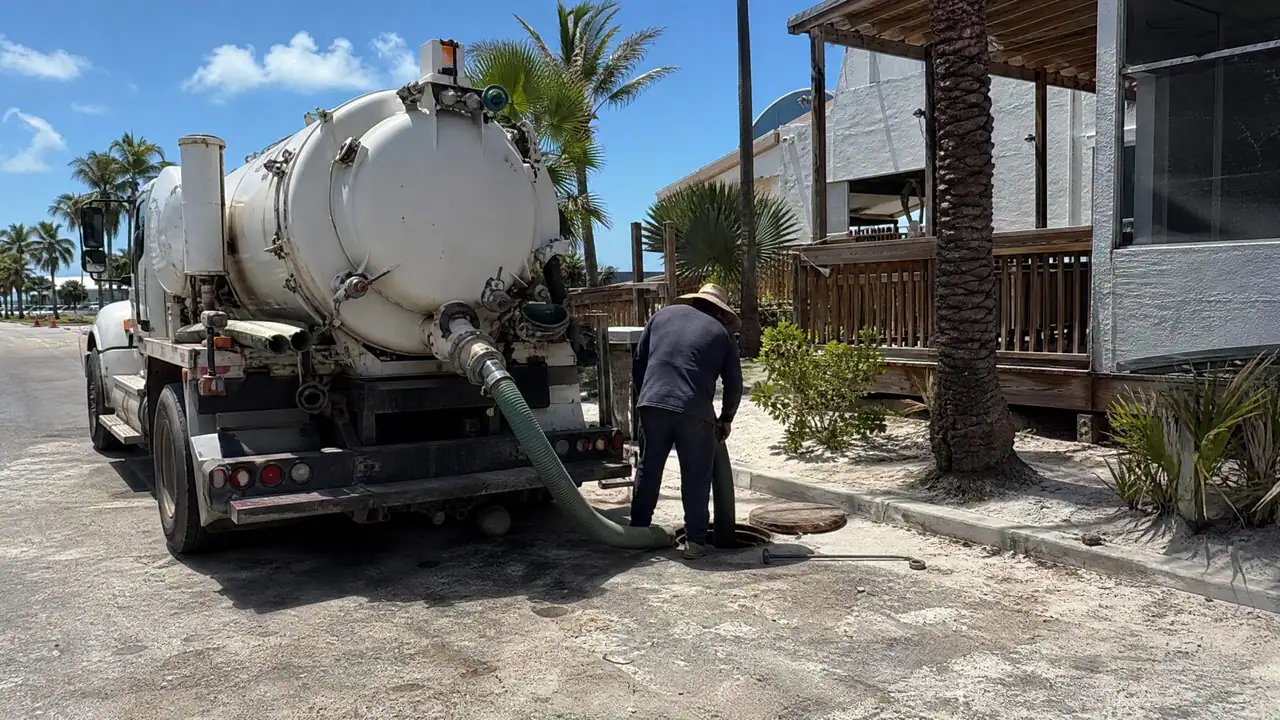
Grease Trap Cleaning Tampa cleans grease traps and pumps grease interceptors for restaurants, hotels, bars and grocery kitchens in Clearwater, from Cleveland Street downtown to Clearwater Beach, Island Estates, Sand Key and Countryside. Grease trap cleaning in Clearwater follows the city's own grease prevention program (City Code Sec. 32.189), which works differently from Pinellas County's fixed 30-day rule.
Where Clearwater kitchens get caught out
-
The city sets your schedule
There's no fixed day count. The Public Works Administrator sets each facility's pumping schedule and can tighten it if the standard isn't met.
-
Five business days to report
Each pumping has to be reported to the city on its form within five business days.
-
24 hours after a spill
A spill that leaves the interceptor must be reported to the state Division of Hotels and Restaurants within 24 hours.
-
County-permitted haulers only
Interceptors over 20 gallons can only be pumped by a hauler permitted by Pinellas County.
Grease trap services in Clearwater
-
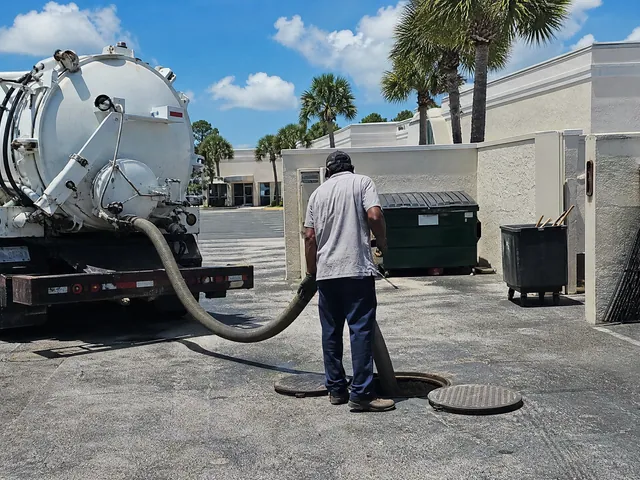
Grease Interceptor Pumping
Outdoor interceptors pumped to empty, scraped and documented on the schedule your city or county enforces.
Details -
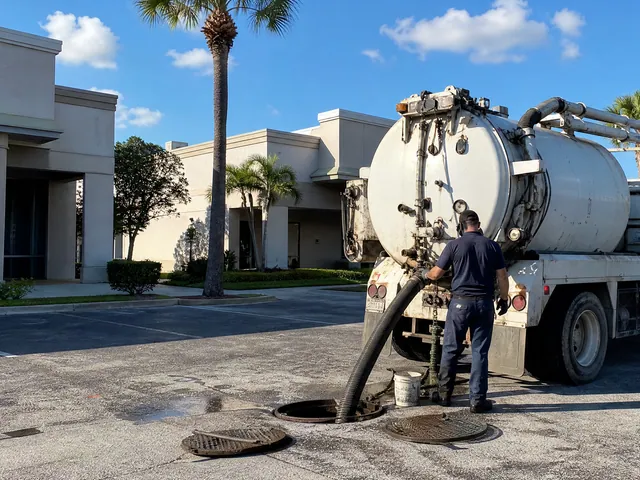
Grease Trap Maintenance Plans
Scheduled pumping set by your jurisdiction's rule and how fast your unit actually fills, with the paperwork kept straight.
Details -
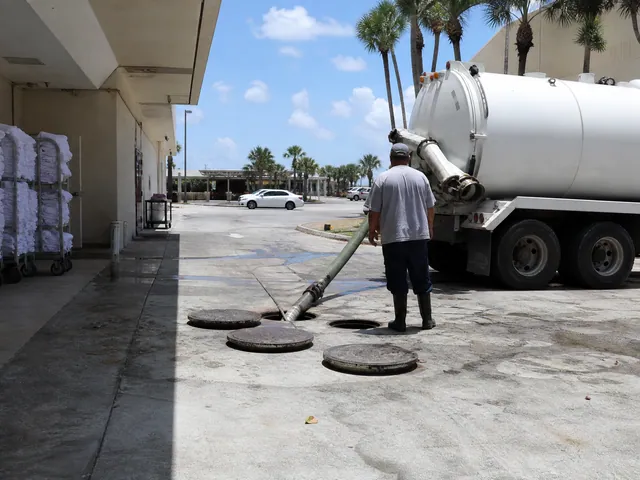
Hotel Kitchen Grease Trap Cleaning
Restaurant, banquet and room-service kitchens on one schedule, booked around the events calendar.
Details -
Emergency Grease Trap Pumping
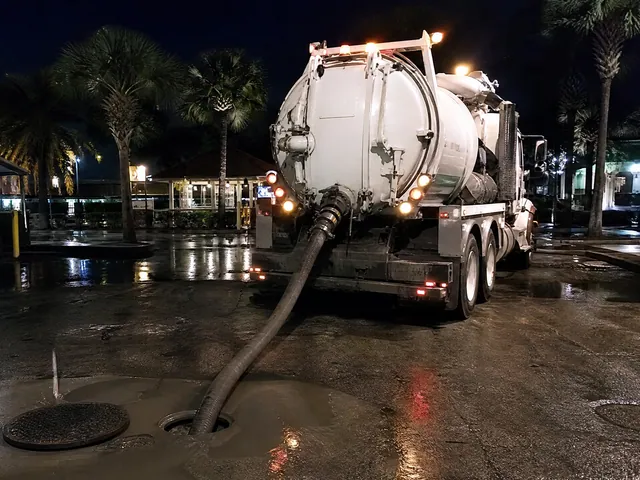
Overflowing trap, backed-up floor drains or a violation deadline. Call, and here's what to do while you wait.
Details
Grease trap rules for Clearwater kitchens
Clearwater runs its own sewer utility and its own grease program under City Code Sec. 32.189, administered by the Public Works Administrator. The city's definition of a food service facility is broad: restaurants, grocery stores, bakeries, lounges, hospitals, nursing homes, churches and non-public schools. Every fixture that can put grease into the sewer must drain through the interceptor, including sinks, dishwashers, automatic hood-wash units and floor drains in food prep and storage areas. Under-sink units count as grease waste interceptors too.
In-ground interceptors must be monitored at least once every 90 operational days to see whether the standard is met, and the city sets the pumping schedule from those results. A facility can ask for an alternate frequency, but if the standard isn't met the city will require more frequent pumping. A pump-out means pumping until empty and cleaning the side walls, baffle walls, cross-pipes and inlet and outlet pipes. Where several interceptors are installed in series, every one is pumped. Emulsifiers and grease cutters are banned, and live-bacteria products need the city's approval.
Beach and causeway kitchens have a narrow window. Visits to Clearwater Beach come in over the Memorial Causeway, and parking and delivery traffic fill up fast in season, so early-morning pump-outs work best. Downtown and Countryside kitchens are reached along SR-60 (Gulf to Bay Boulevard) and US-19. Because each pump-out has to be reported within five business days, the manifest is handed over at the end of every visit.
How a Clearwater pump-out works
-
Step 1: First call
Tell us the kitchen's address, what kind of unit you have, and when it was last pumped. We tell you which rule applies and give a price range on the phone.
-
Step 2: On-site check
We open the lids, measure grease and solids depth, and look at the baffles, tees and outlet. Ask for a written quote before work starts.
-
Step 3: Full pump-out
The unit is pumped to empty, walls and baffles are scraped, and the inlet and outlet are checked for flow.
-
Step 4: Manifest and schedule
You get a signed manifest for your logbook and a suggested date for the next visit, set by your rule and how fast the unit filled.
Why Clearwater kitchens call us
-
Pumped to empty, every time
No decanting, no skimming, no water returned to the tank. That's state law, and it's the only way a pump-out actually resets the 25% clock.
-
Your rule, not a generic one
Tampa, Hillsborough County, Pinellas County, St. Pete, Clearwater, Largo and Pasco each set different limits. Your schedule follows the one that governs your address.
-
Paperwork an inspector accepts
Signed manifest, measured depths and written notes on anything broken, ready for your logbook.
-
Prices you can see first
Published price ranges on this site, with the evidence behind each one, and a price range on the phone. Ask for a written quote before work starts.
Where we work in Clearwater
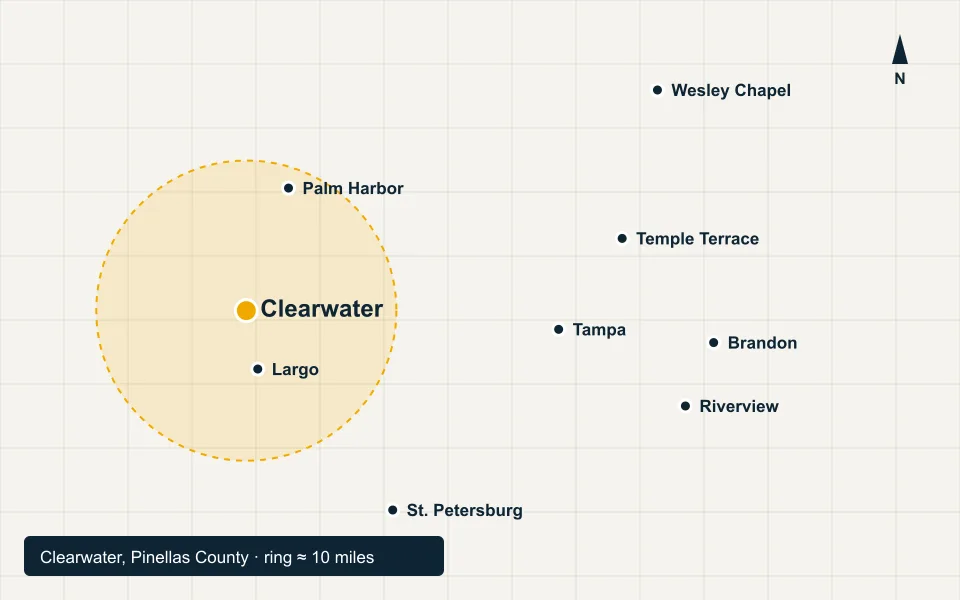
Clearwater neighborhoods we cover
- Downtown / Cleveland Street
- Clearwater Beach
- Island Estates
- Sand Key
- Countryside
Near these landmarks
- Pier 60
- Clearwater Marine Aquarium
- BayCare Ballpark
- Countryside Mall
How we reach you
- US-19
- SR-60 / Gulf to Bay Blvd
- Memorial Causeway
- Courtney Campbell Causeway
Clearwater grease trap questions
How often does a grease interceptor have to be pumped in Clearwater?
How much does grease trap cleaning cost in Clearwater?
How soon do I have to report a pump-out to the city?
What do I do if grease spills out of the interceptor?
Does Pinellas County's 30-day rule apply in Clearwater?
Rules and costs for Clearwater
- How Much Does Grease Interceptor Pumping Cost? (Tampa Bay, 2026)Per-visit ranges by tank size, the per-gallon public-contract benchmark, and what your city or county's pumping rule does to the annual bill.
- What Grease Trap Records and Manifests Does Florida Require?What a valid service manifest contains, who signs it, and the record-keeping rules that sit on top of it in each Tampa Bay program.
- How Often Should a Grease Trap Be Cleaned in Tampa Bay?Nine rule sets in one metro. Find the one your kitchen drains into, then check it against how fast your unit actually fills.
Nearby service areas
Get a Clearwater quote
Two quick steps. We call you back with a price range.
Faster by phone: (727) 476-9241