Skip to content

Grease Trap Installation in Tampa

New and replacement grease traps and interceptors for Tampa Bay kitchens: sizing, permits, and the triggers that make a city require one.

  • Quotes by phone
  • Published price ranges
  • Signed manifest every visit
  • Hillsborough, Pinellas & Pasco
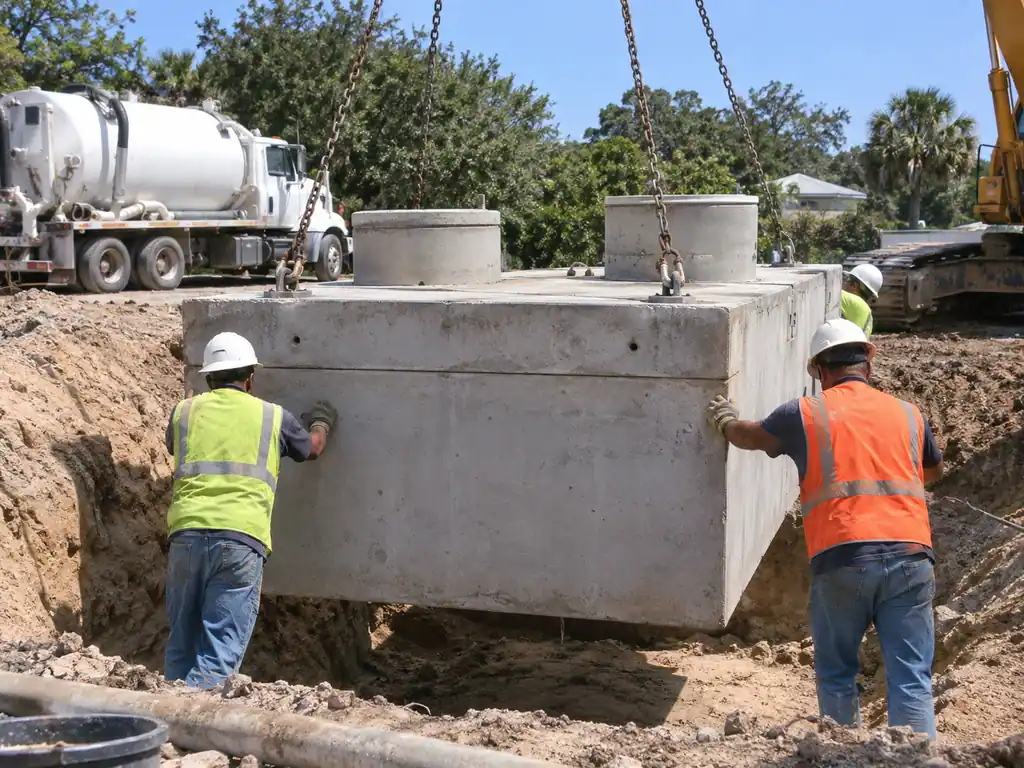
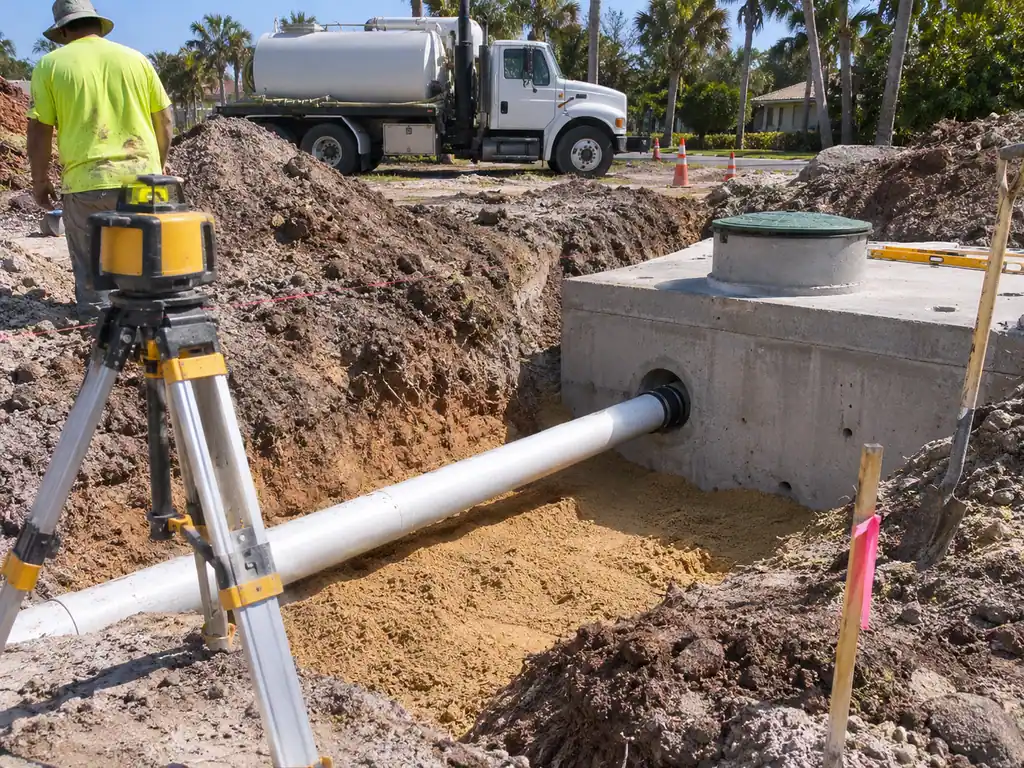
New precast concrete grease interceptor being set into an excavation behind a Tampa restaurant

Last updated:

Grease Trap Cleaning Tampa helps restaurants and commercial kitchens across Tampa, Hillsborough, Pinellas and Pasco with grease trap installation and replacement, from a small under-sink trap to a 1,500-gallon outdoor interceptor. Grease trap installation in Florida is permitted plumbing work: the unit has to be sized and installed to the Florida Building Code – Plumbing and approved by the local building official.

The City of Tampa's own figures put a new small trap (0–100 gallons) at $250–$1,500 installed and a new 750–1,500 gallon interceptor at $4,000–$8,500. Those are official numbers, so they carry high confidence.

What happens on the first visit

  1. Confirm the requirement. Which program applies, and whether a trap or an interceptor is required for your fixtures and flow.
  2. Size it. Sizing follows the Florida Building Code – Plumbing and your fixture count and flow. The City of Tampa publishes a sizing calculator.
  3. Permit. Installation, enlargement, alteration and replacement need a permit from the building official, with design criteria attached.
  4. Install and connect. Every grease-producing fixture is routed through the unit and restroom waste is kept out of it, with venting and a flow-control device where required. Work needing a licensed plumbing contractor is identified up front.

When a city can require a new grease trap

In the City of Tampa, existing facilities may keep operating their current units if they are in good condition. The City can require a new trap or interceptor, or a repair, if any of these apply (Tampa Code Sec. 26-306(b)(2)):

  • The facility contributes enough grease to cause line stoppages
  • Wastewater grease exceeds 400 mg/l in the inspector's sampling
  • There is no grease trap or interceptor
  • The existing unit is defective or can't be repaired
  • Remodelling that requires a plumbing permit
  • The facility is sold or changes ownership
  • Fixtures aren't connected through the unit

Clearwater requires existing facilities without an interceptor to install one, and non-compliant units to be upgraded within 180 days of notice (Clearwater Code Sec. 32.189). Largo enforces an in-ground interceptor requirement for food service facilities.

Trap or interceptor?

In the City of Tampa's definitions, a grease trap is an indoor unit rated at 50 gallons per minute or less, and an interceptor is an outdoor, in-ground tank rated above 50 gpm or holding 750 gallons or more. A trap is cheaper to install but needs cleaning at least weekly. An interceptor costs more up front and is pumped less often. See grease trap vs grease interceptor and grease trap installation cost.

What's included

  • Requirement confirmed for your jurisdiction
  • Sizing to the Florida Building Code – Plumbing
  • Permit application support with design criteria
  • All grease fixtures routed through the unit
  • No restroom waste connected
  • Venting and flow-control device where required
  • Licensed-contractor needs identified up front
  • First pump-out schedule set at handover

Pricing and payment

Installation is quoted per project after sizing, since excavation, piping, permits and the unit itself vary widely. The bands below are the City of Tampa's published figures. Ask for a written quote before any work starts. Prices on this site are typical market ranges, not quotes.
What grease trap installation costs in Tampa Bay

Typical market ranges per visit, with the strength of the evidence shown for each.

  • New small grease trap installed (0–100 gal)

    $250–$1,500

    installed

    High confidence

    City of Tampa Grease Ordinance FAQ

  • New grease interceptor installed (750–1,500 gal)

    $4,000–$8,500

    installed

    High confidence

    City of Tampa Grease Ordinance FAQ

What changes the price

  • Tank size and how full it is
  • Hose run and access from the truck
  • Disposal fee (sometimes included)
  • After-hours or emergency timing (+20–100%)

Estimate your annual cost

DIY vs the cheapest hauler vs doing it properly

Comparison of DIY, cheapest hauler and proper service
Factor Do it yourselfCheapest haulerDone properly
What's legal Small indoor traps only, with a written protocol (Tampa) or under 50 lb capacity (Hillsborough County)Pump-and-return is banned statewide, but still happensFull pump-out to empty, as Florida law and every local program require
What gets removed Floating grease you can scoopOften just the top layer and some waterFloating grease, gray water, bottom solids, and buildup scraped off walls and baffles
Paperwork Your own log entryA receipt, sometimesSigned manifest with volume, condition and disposal ticket number
Checked against the rule Rarely measuredNot measuredGrease and solids depth measured against your jurisdiction's limit
Problems spotted Only what you can seeUsually not reportedCracked baffles, missing tees and flow-control issues noted in writing
Real cost Staff time; risk of a failed inspectionLow price, then repeat clogs and re-inspection feesA known price per visit on the schedule your rule sets

How grease trap installation works

  1. Step 1: First call

    Tell us the kitchen's address, what kind of unit you have, and when it was last pumped. We tell you which rule applies and give a price range on the phone.

  2. Step 2: On-site check

    We open the lids, measure grease and solids depth, and look at the baffles, tees and outlet. Ask for a written quote before work starts.

  3. Step 3: Full pump-out

    The unit is pumped to empty, walls and baffles are scraped, and the inlet and outlet are checked for flow.

  4. Step 4: Manifest and schedule

    You get a signed manifest for your logbook and a suggested date for the next visit, set by your rule and how fast the unit filled.

What the work looks like

Illustrative photos of the work described on this page.

  • Precast concrete grease interceptor tank being lowered into an excavation
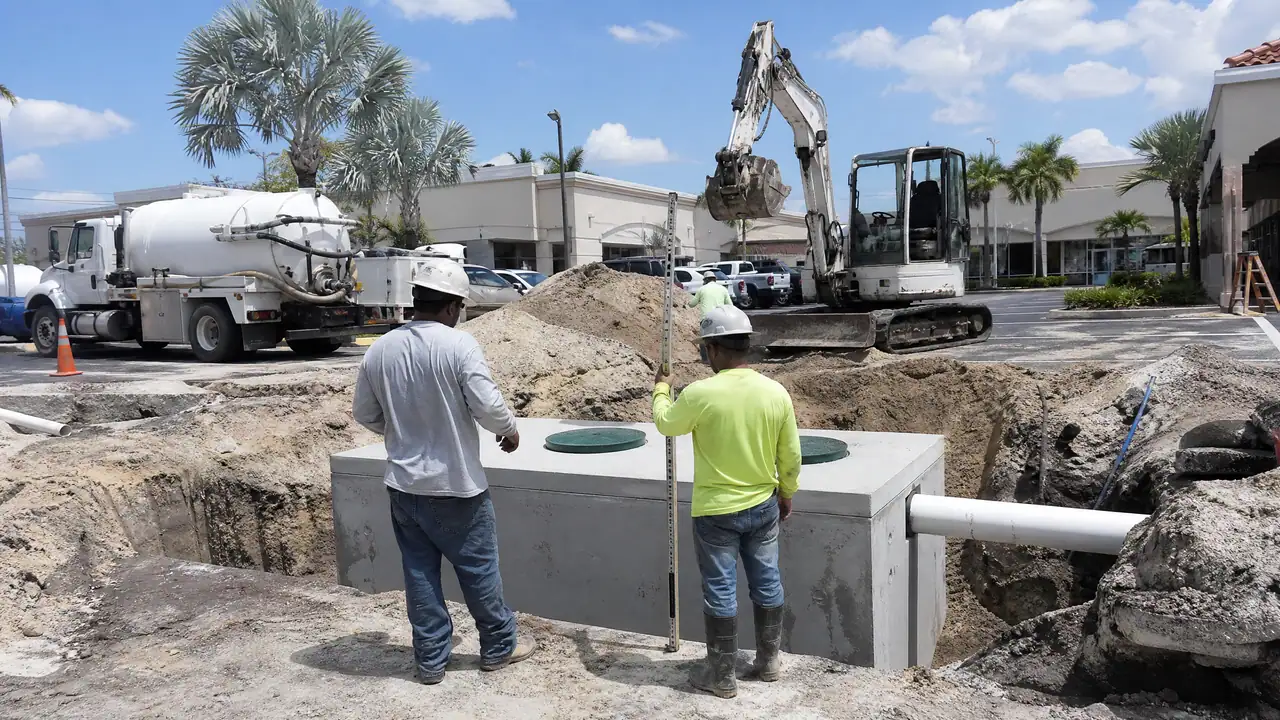
  • New PVC inlet piping connected to a grease interceptor in a trench
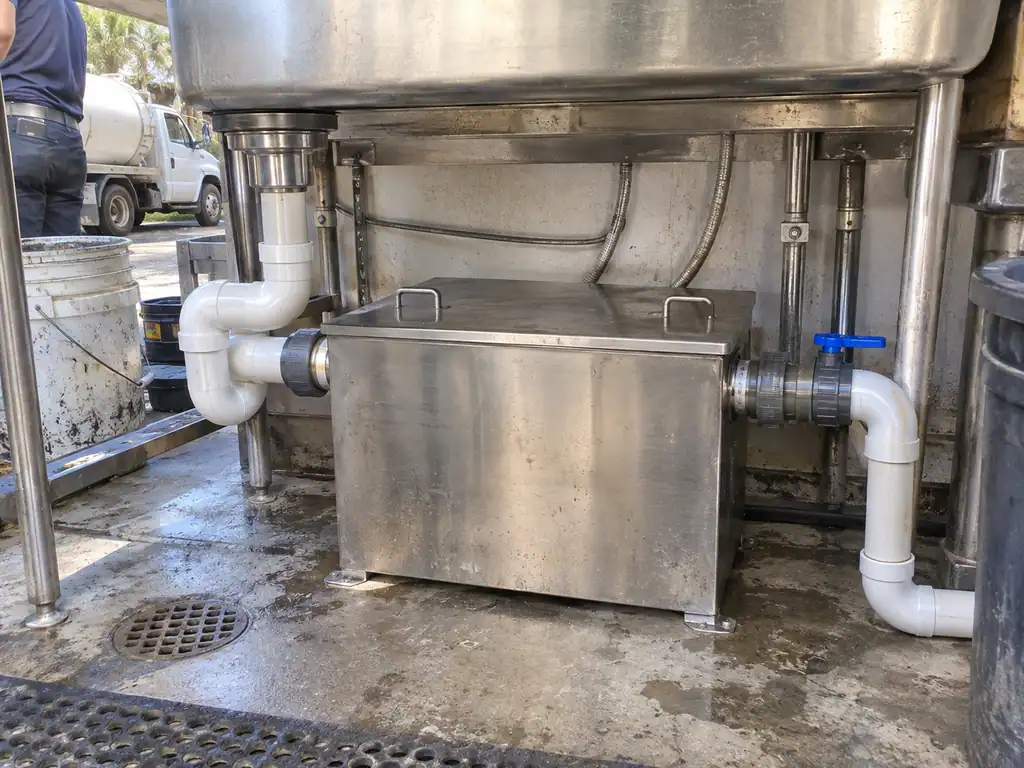
  • Newly installed under-sink grease trap with flow-control fitting
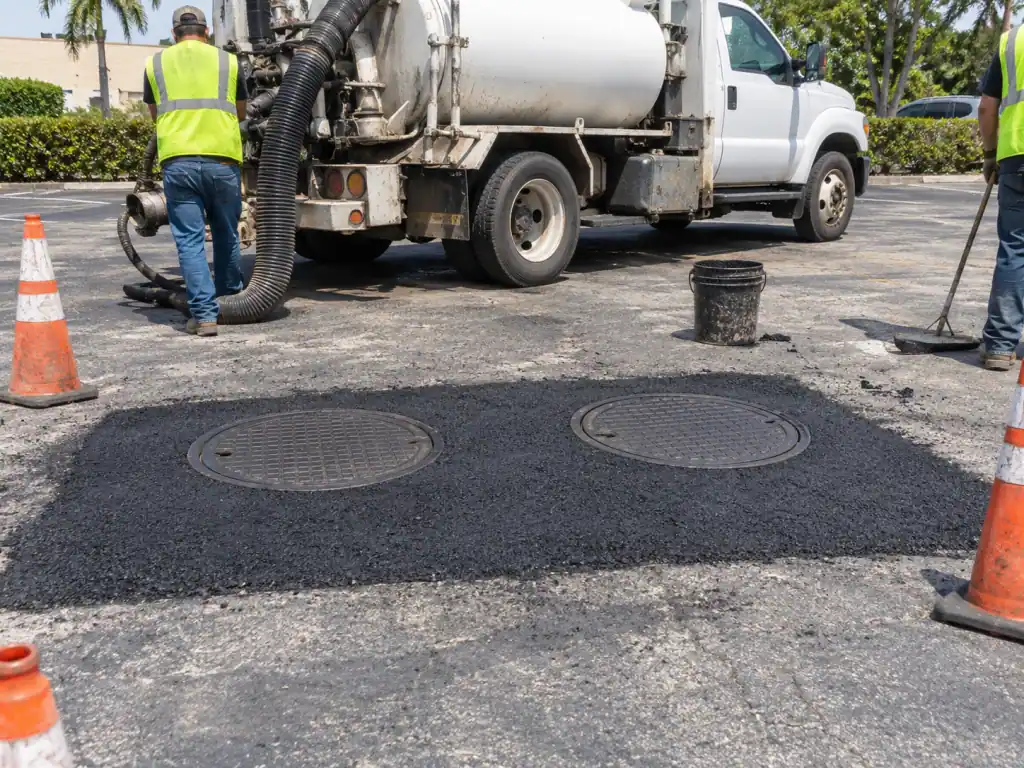
  • Two new grease interceptor lids set in a fresh asphalt patch

Grease Trap Installation questions

How much does a new grease trap cost in Tampa?

The City of Tampa puts a small trap (0–100 gallons) at $250–$1,500 installed and a 750–1,500 gallon interceptor at $4,000–$8,500. Excavation, piping runs and permits move the final number.

Do I need a permit to install or replace a grease trap?

Yes. In the City of Tampa, installing, enlarging, altering, repairing, removing or replacing a trap or interceptor requires a permit from the building official, with design criteria to the Florida Building Code – Plumbing.

Will buying an existing restaurant force a new grease trap?

Not automatically, but a sale or change of ownership is one of the triggers that lets the City of Tampa require one. Inspect before closing.

How is a grease trap sized?

By the fixtures that drain to it and their flow rate, under the Florida Building Code – Plumbing. Hillsborough County directs owners to a licensed commercial plumber for sizing.

Do I get paperwork I can show an inspector?

Yes. Every pump-out ends with a signed service manifest showing the date, the volume removed, the condition of the unit, confirmation that nothing was returned to it, and the disposal facility's ticket number. Florida law (F.S. 403.0741) requires you to keep that manifest on site for at least a year, and some local programs ask for three.
Call (727) 476-9241 · Talk to a person about your trap