Last updated:
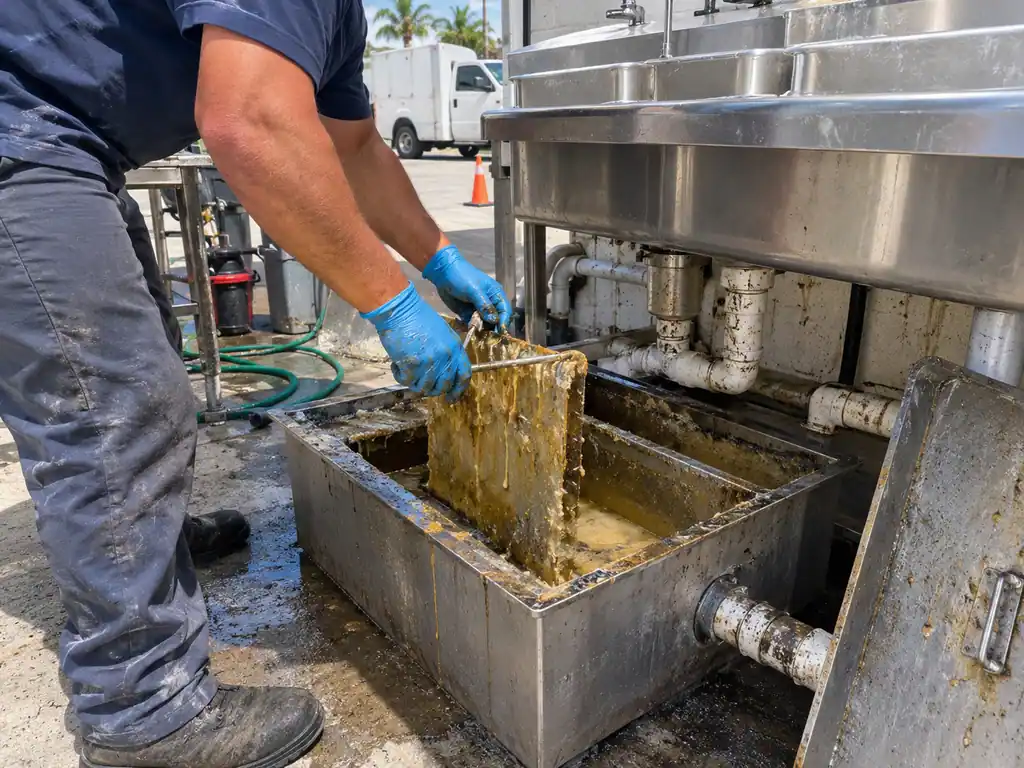
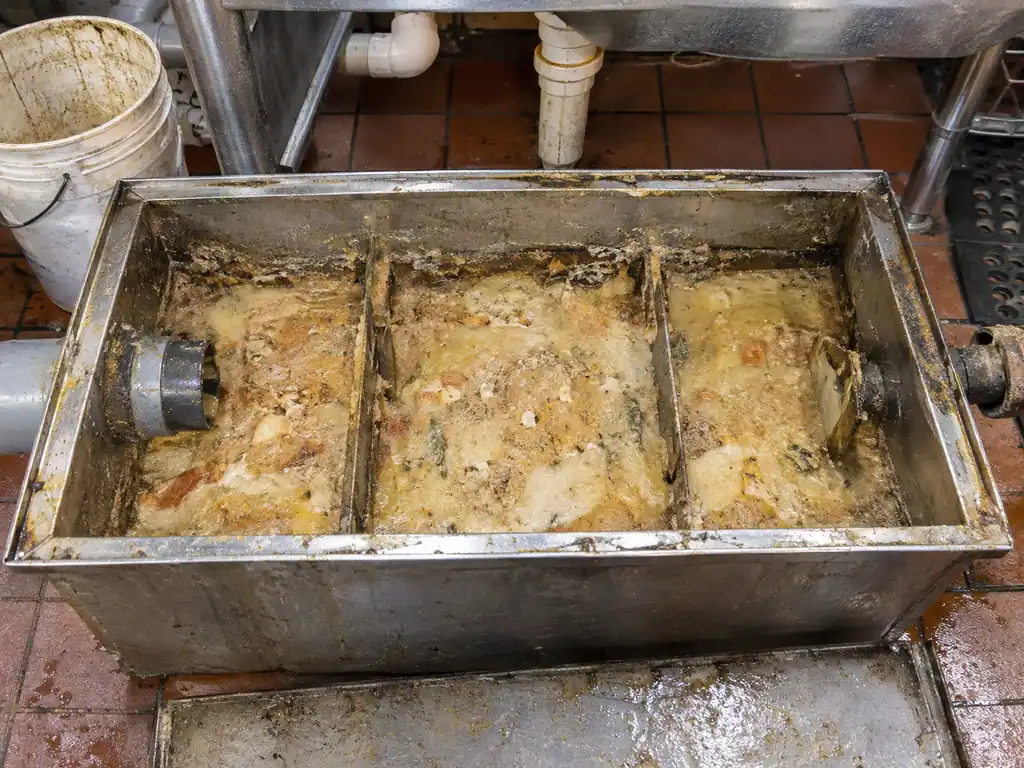
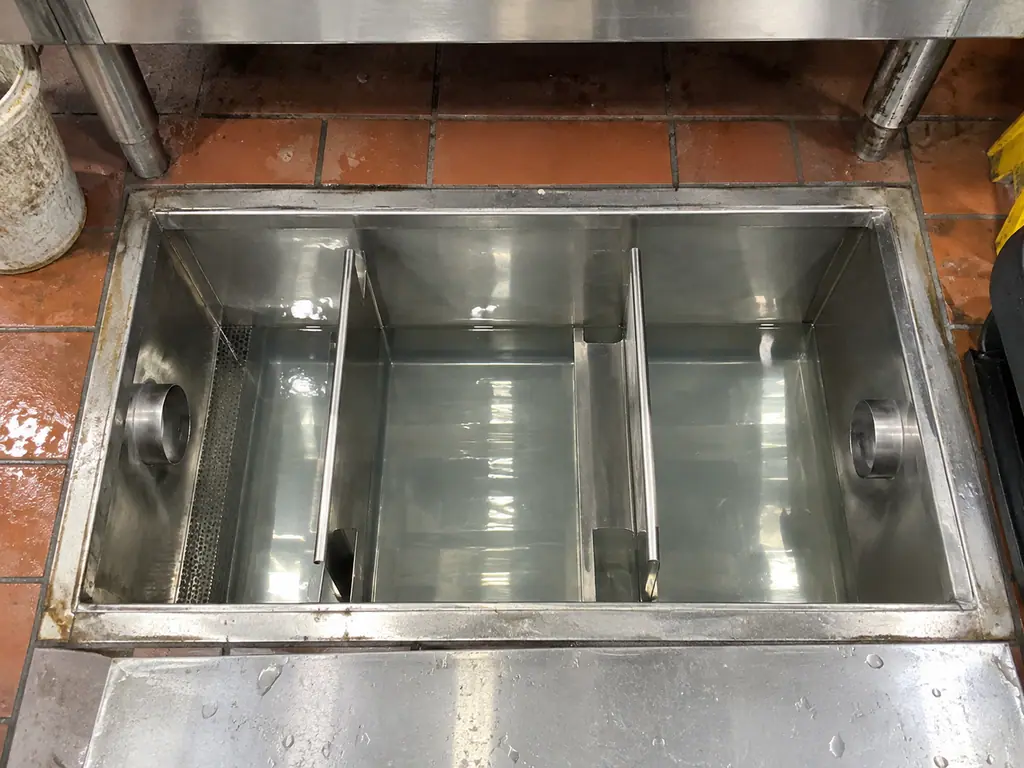
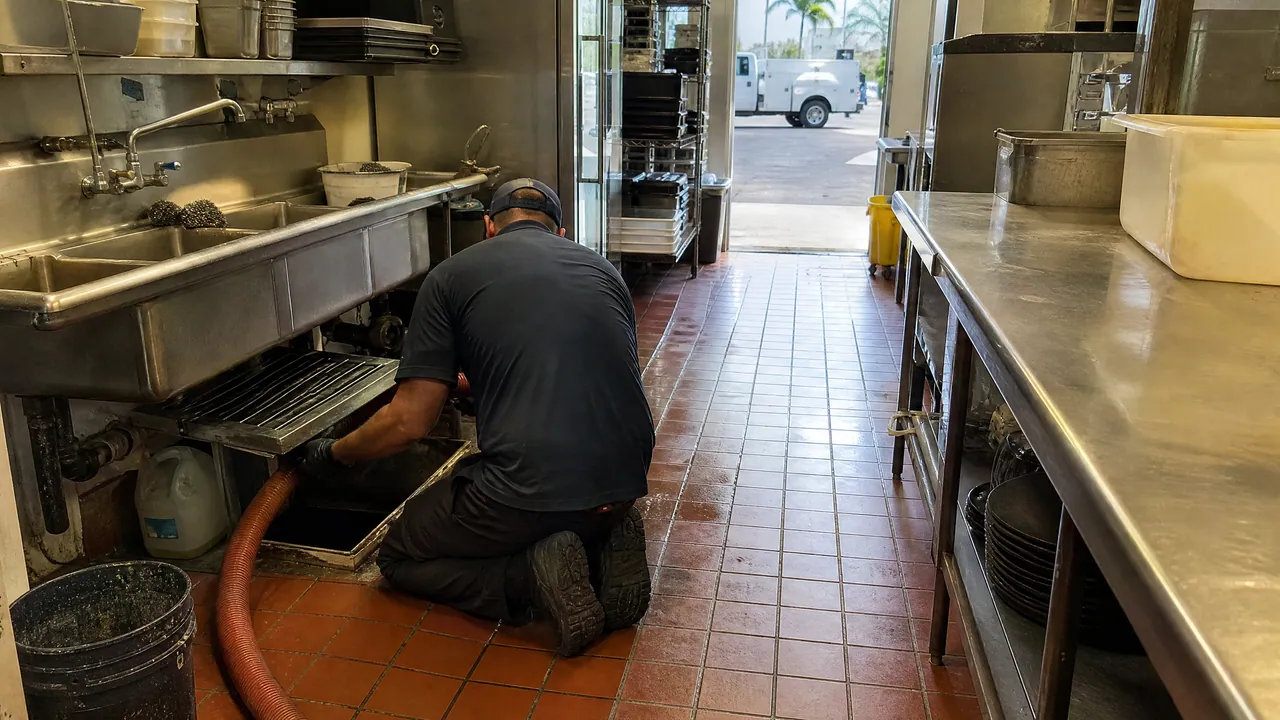
Grease Trap Cleaning Tampa provides indoor grease trap cleaning for restaurants, cafés, bakeries and commissary kitchens across Tampa, Hillsborough, Pinellas and Pasco. Indoor grease trap cleaning covers the smaller units that sit under a three-compartment sink or set into the kitchen floor: the trap is emptied, the baffles and walls are scraped, the flow-control device is checked, and the grease leaves with a registered hauler.
Indoor traps fill fast because they are small. The City of Tampa, Temple Terrace, Pinellas County and St. Petersburg all require them to be opened and cleaned at least once a week. Most kitchens split the work: staff handle the weekly clean-out under a written protocol, and a hauler does a full cleaning and takes the waste away on a set schedule.
What happens on the first visit
The first visit sets the schedule as much as it cleans the trap:
- Measure. We lift the lid and record how much of the trap is grease and solids, against the 25% line (20% in Pasco County).
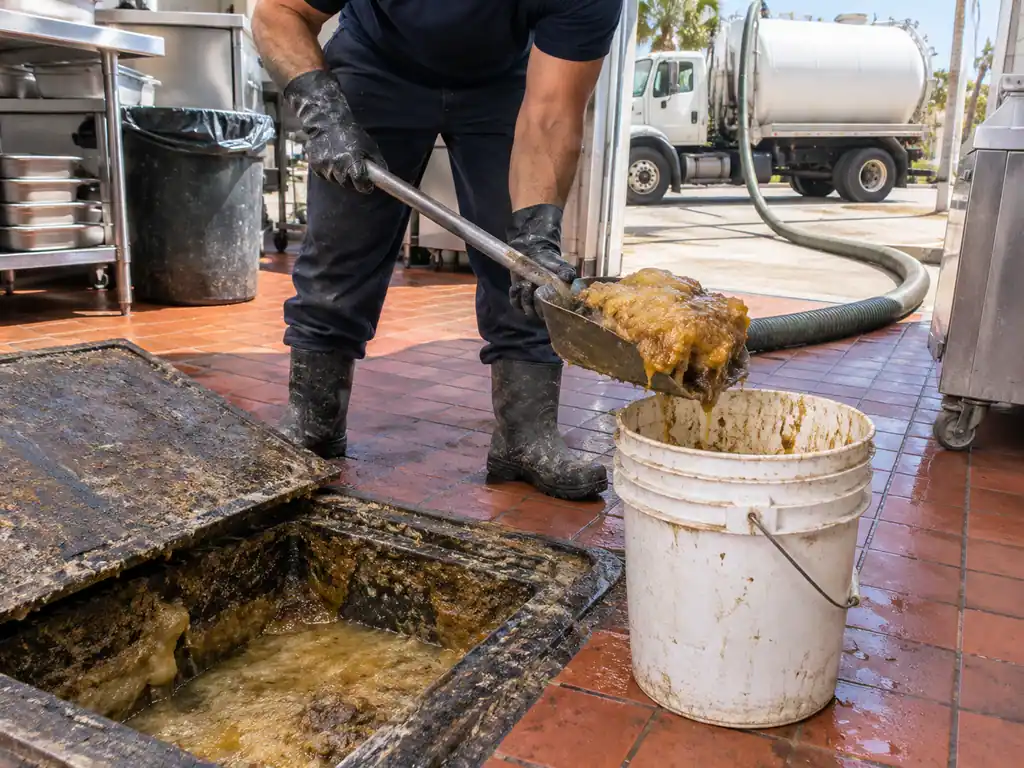
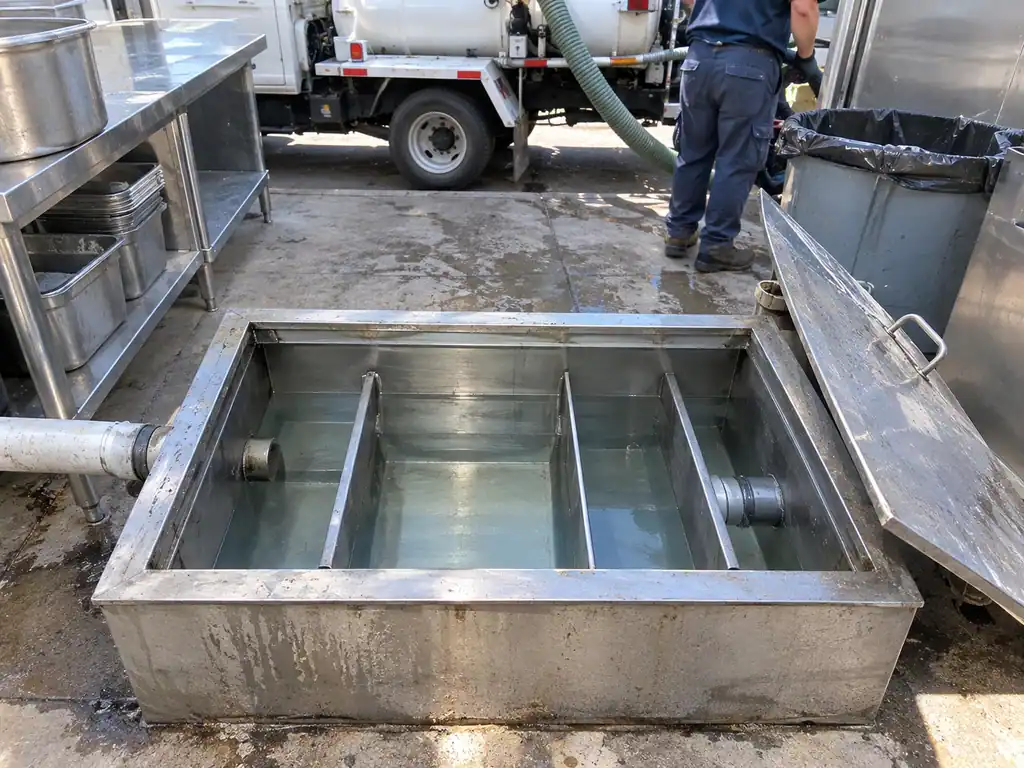
- Empty and scrape. Grease, water and solids come out; the baffles and walls are scraped; the outlet is cleared.
- Check the fittings. The flow-control device, vent and lid gasket are checked. A missing flow-control device is one of the first things a Tampa inspector looks for.
- Log and haul. You get a signed record for your logbook, and the waste goes to a permitted disposal facility.
Can your staff clean the trap themselves?
Sometimes, within limits that change by jurisdiction:
- City of Tampa: a facility may hire a registered hauler or write its own cleaning protocol and do the work in-house. Grease removed in-house can go out with the trash only if it is solid, dry, mixed with an absorbent, bagged or sealed, and no more than 5 pounds (Tampa Code Sec. 26-306(f)). More than that needs a registered hauler.
- Unincorporated Hillsborough County: only under-counter traps holding less than 50 pounds of grease may be self-cleaned, with the waste going to solid waste.
- Pinellas County and St. Petersburg: weekly cleaning recorded in a bound logbook. St. Petersburg also expects a written cleaning protocol on file.
In practice, staff do the weekly scoop and log it, and a hauler handles the deep clean, the solids and the disposal paperwork. See can I clean my own grease trap?
Automatic grease removal devices (AGRDs)
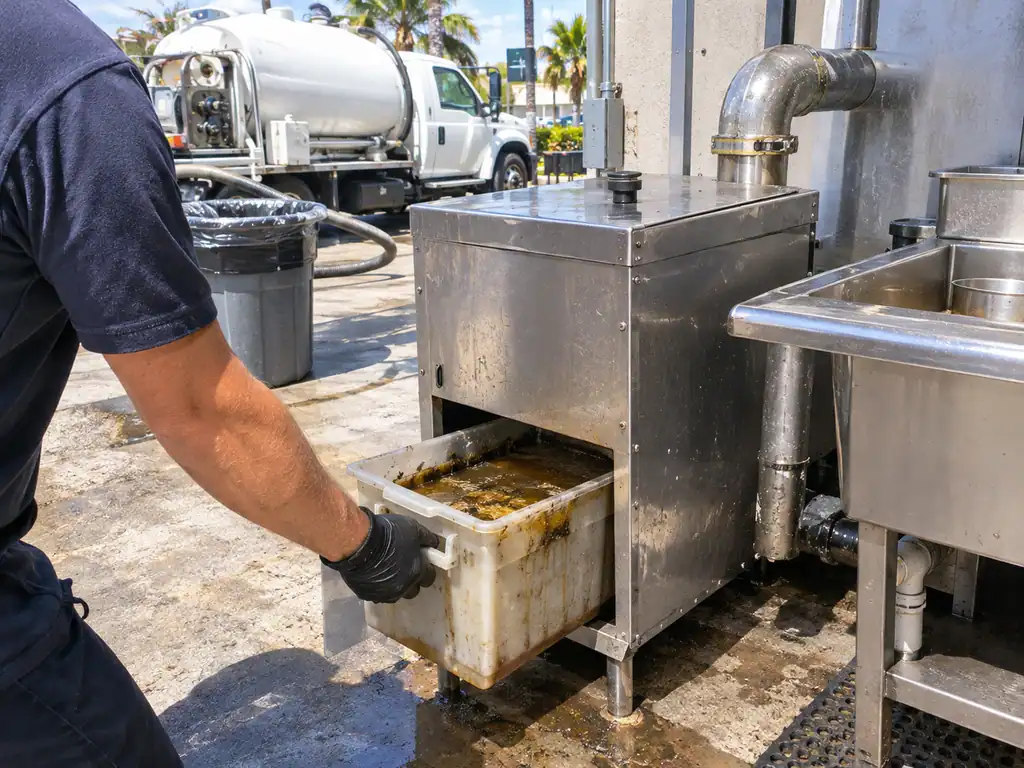
An automatic grease removal device skims floating grease into a removable container on a timer, so staff empty a container instead of scooping a trap. It cuts down the weekly mess. It doesn't remove the need for service: solids still settle in the tank, the strainer basket fills, and the skimmer, heater and container seals wear out.
We service AGRDs the same way as any indoor trap: the tank is emptied and scraped, the solids basket cleared, and the skimmer and container checked. The visit is logged like any other cleaning. In the City of Tampa, adding any chemical, enzyme or bacteria product to a trap or AGRD needs the grease inspector's approval first (Sec. 26-306(g)).
Trap or interceptor? Make sure you book the right service
The City of Tampa treats a unit inside the building rated at 50 gallons per minute or less as a grease trap, and an outdoor, in-ground tank above 50 gpm or holding 750 gallons or more as an interceptor. If yours sits outside under a manhole cover, you want grease interceptor pumping. Food trucks and commissaries have their own page: food truck grease trap cleaning.
What's included
- Grease and solids depth measured before cleaning
- Trap emptied: grease, water and solids
- Baffles, walls and outlet scraped and cleared
- Flow-control device, vent and lid gasket checked
- AGRD tank, basket and skimmer serviced
- Waste hauled to a permitted disposal facility
- Signed record for your logbook
- Cleaning schedule set by your rule and fill rate
Pricing and payment
Indoor trap cleaning is priced per visit, mainly by trap size, how much has built up since the last cleaning, and how often you book. The band below is a typical Tampa Bay range from one commercial source, so it carries low confidence. Ask for a written quote before any work starts. Prices on this site are typical market ranges, not quotes.