Last updated:
Grease Trap Cleaning Tampa handles emergency grease trap pumping for restaurants and commercial kitchens across Tampa, Hillsborough, Pinellas and Pasco when a trap overflows, an interceptor backs up, or an inspector's deadline is running. Call any time. If we can't pick up, leave a message and you'll get a call back.
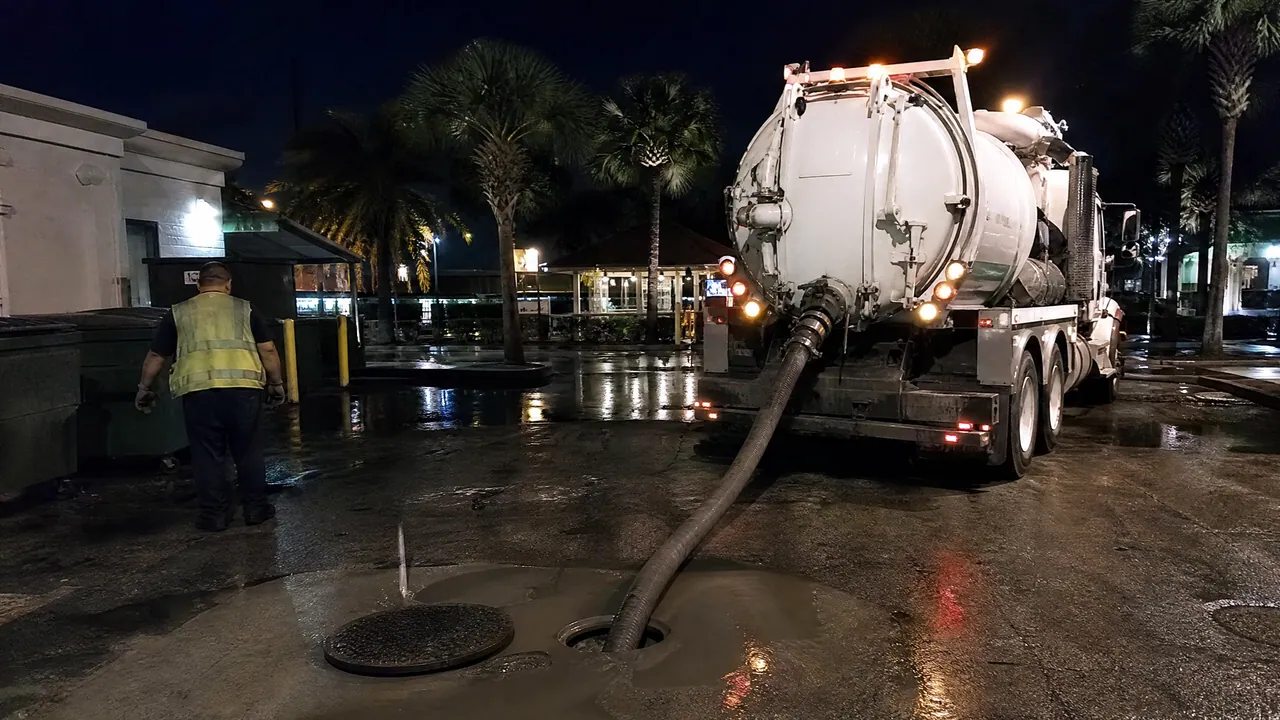
An emergency grease trap pumping visit is a full pump-out done out of sequence: the unit is emptied, scraped and checked, the line is cleared if grease has moved past the trap, and you get a signed manifest you can show the inspector.
What happens on the first visit
On an emergency call the order changes. Stopping the overflow comes first:
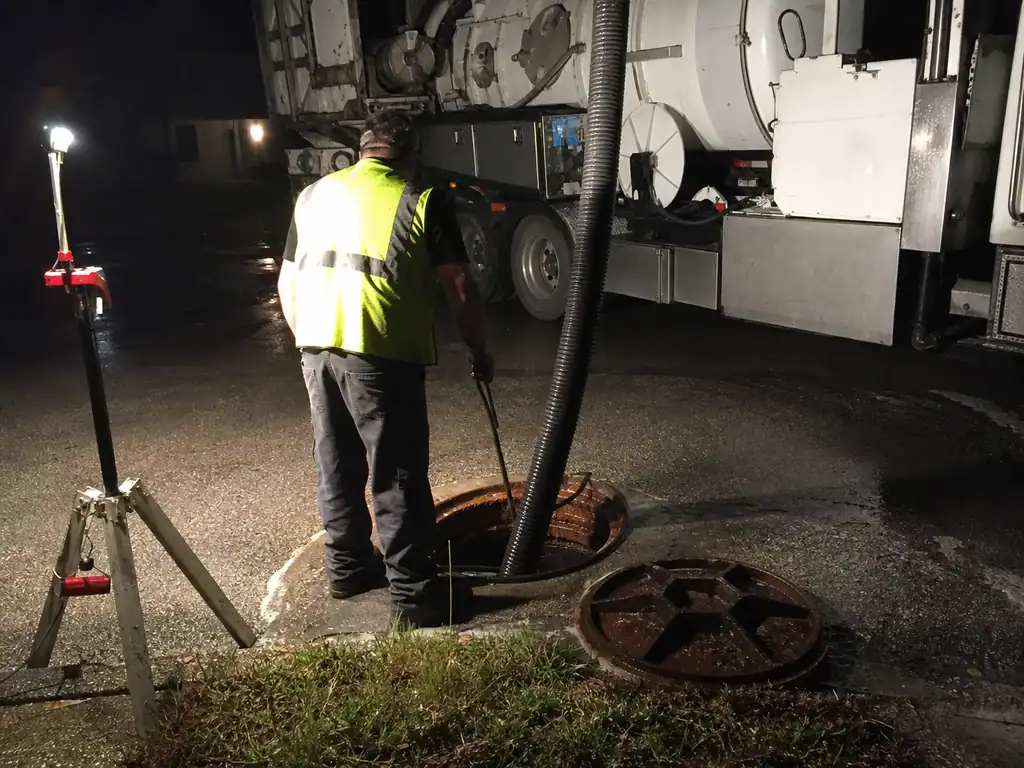
- Stop the flow. The trap or interceptor is pumped down first so the backup stops.
- Find the cause. Is the unit full, the outlet blocked, or the line downstream plugged? A full trap and a blocked line look the same from the kitchen floor.
- Finish the job. The unit is pumped to empty and scraped. If grease has moved into the line, it is jetted (see hydro jetting).
- Paper the event. A signed manifest and written notes on the cause, for your logbook and any inspector or insurer.
Grease trap overflowing? What to do while you wait
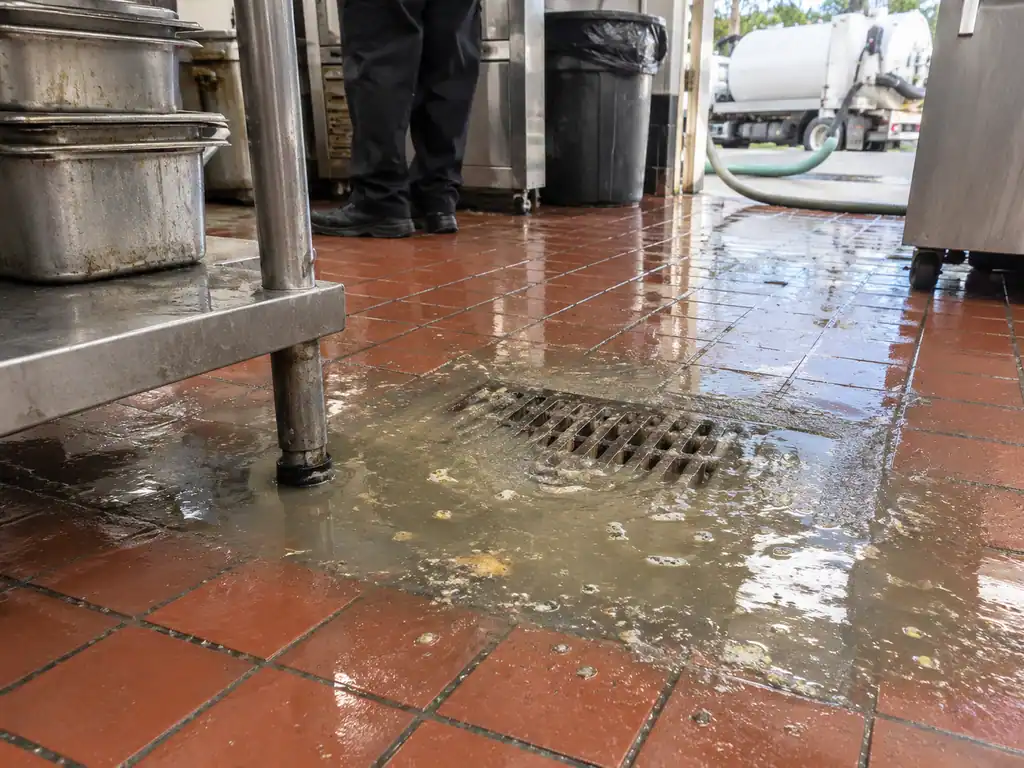
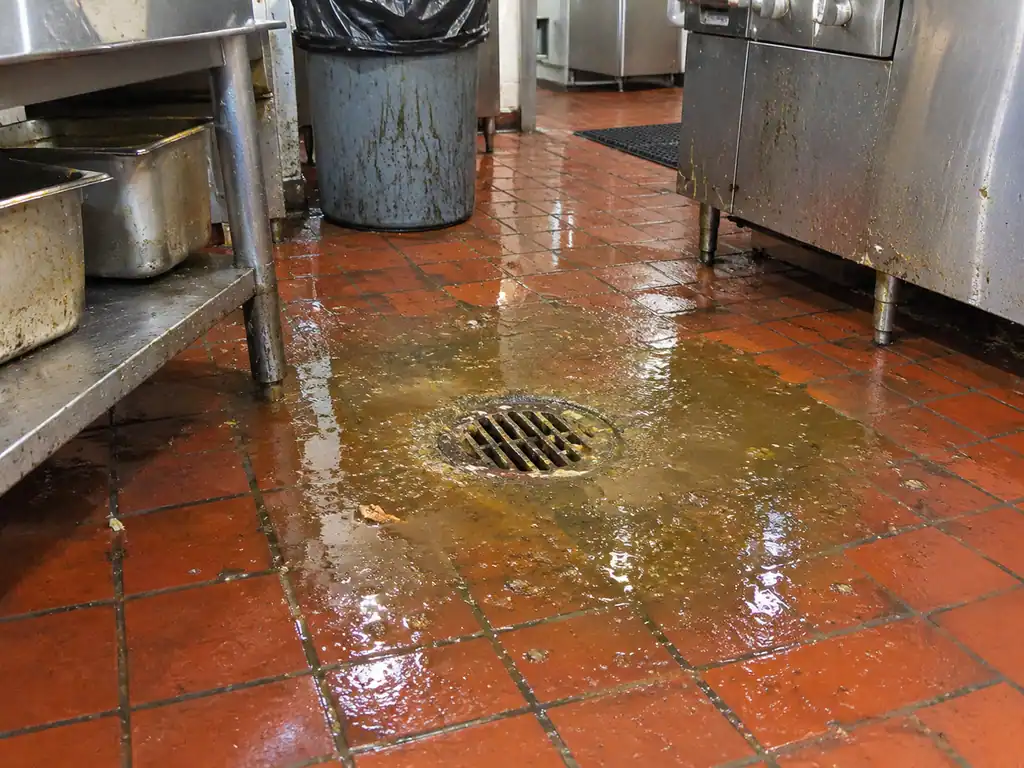
A grease trap overflowing usually means it's full or its outlet is blocked. Until the truck arrives:
- Stop sending water to it. Shut down the dish machine and stop using the sinks that drain to the trap. Every gallon you send pushes more grease out.
- Don't flush it with hot water or chemicals. Hot water only moves the grease further down the line, where it sets again. Chemicals and enzymes need the inspector's approval in Tampa, and Clearwater bans emulsifiers.
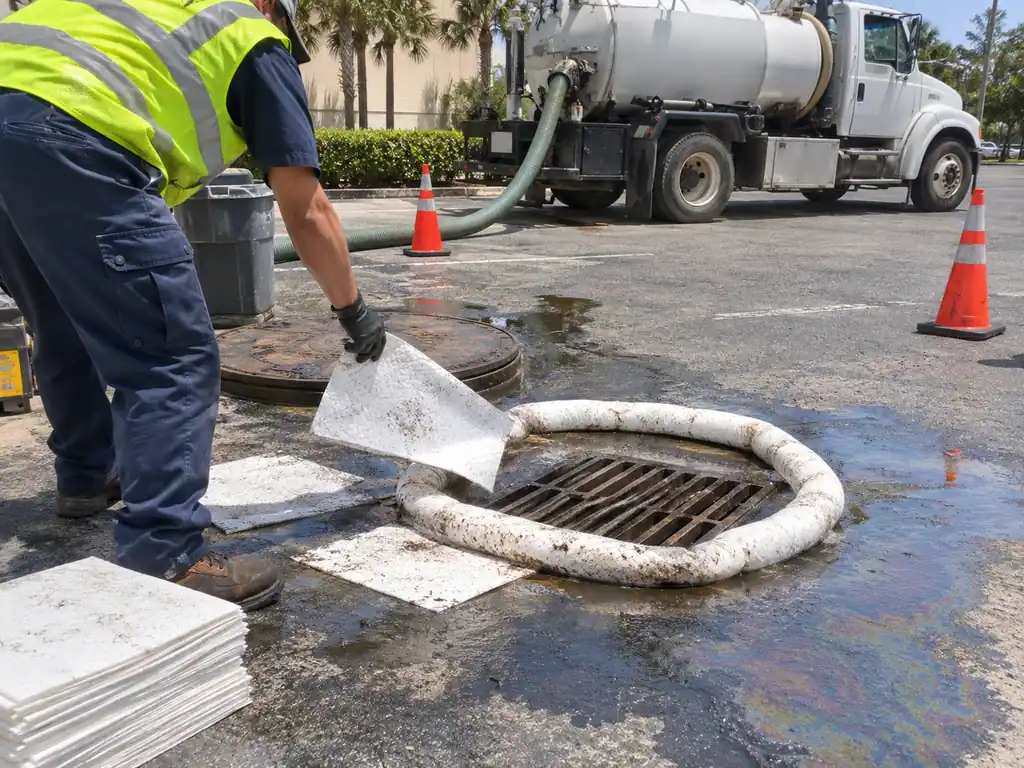
- Keep it out of storm drains. If grease is reaching an outdoor drain or the parking lot, block it with absorbent pads or booms. Don't use loose absorbent like kitty litter that can wash into the storm system.
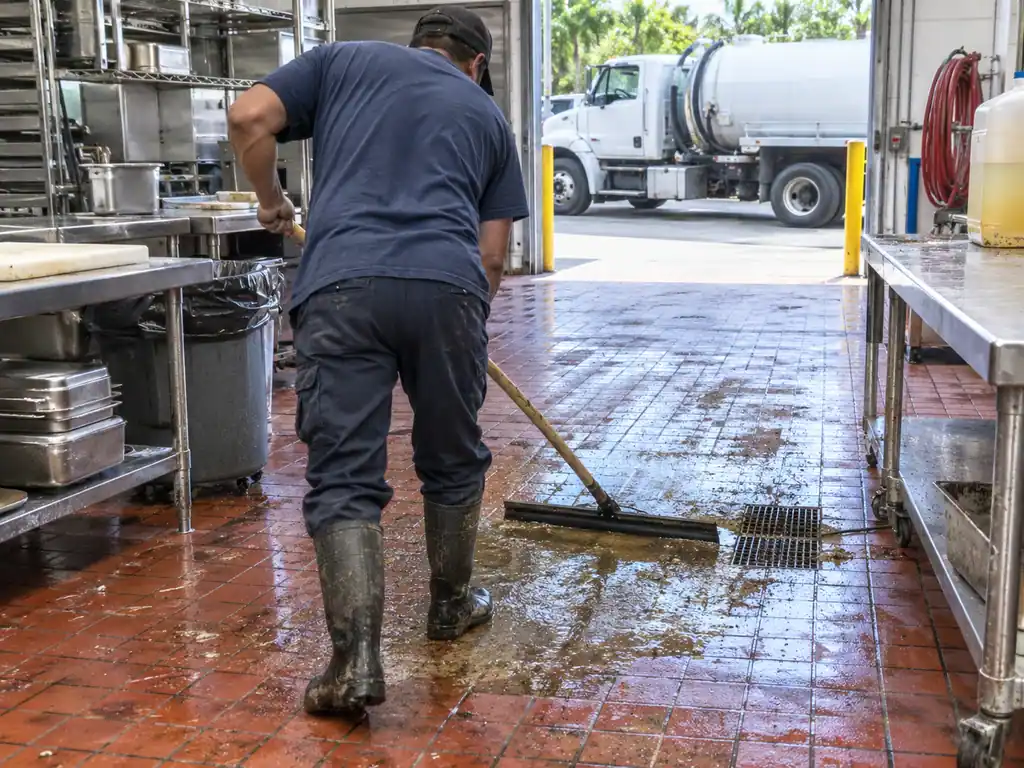
- Keep people safe. Close off wet floors and keep food and prep surfaces away from the backup.
- Record it. Note the time, take photos and keep any staff log entries. In Clearwater, a spill that leaves the interceptor must be reported to the state's Division of Hotels and Restaurants within 24 hours (Clearwater Code Sec. 32.189).
What counts as an emergency
- Overflow or backup: grease or wastewater coming up through floor drains, sinks or the interceptor lid.
- A violation deadline: the City of Tampa gives 24 hours to clean a grease trap and 72 hours to pump an interceptor after a Notice of Violation for missed frequency.
- An inspection tomorrow with a trap you know is past 25%.
- A strong sewer smell in the kitchen or dining room that started suddenly.
If the backup includes sewage from restrooms, say so on the call. Sanitary waste must never enter a grease trap, and Tampa treats that as a pumping trigger on its own.
Why emergency pumping costs more
Out-of-sequence and after-hours work carries a premium, typically 20% to 100% over the scheduled rate. Florida public contracts show the low end: Brevard County's 2024 award priced overtime and emergency pumping 20–40% above standard time. The cheapest emergency is the one a maintenance plan prevents. See emergency grease trap pumping cost.
What's included
- Overflow stopped first
- Cause found: full unit, blocked outlet or blocked line
- Pumped to empty and scraped
- Outlet and line cleared where needed
- Written note of the cause and any damage
- Signed manifest for the inspector
- Waste hauled to a permitted facility
- Advice on a schedule that prevents a repeat
Pricing and payment
Emergency visits are priced like a scheduled pump-out for the same unit, plus an emergency or after-hours premium of roughly 20–100%. The bands below are the scheduled rates. Ask for a written quote before any work starts. Prices on this site are typical market ranges, not quotes.