Last updated:
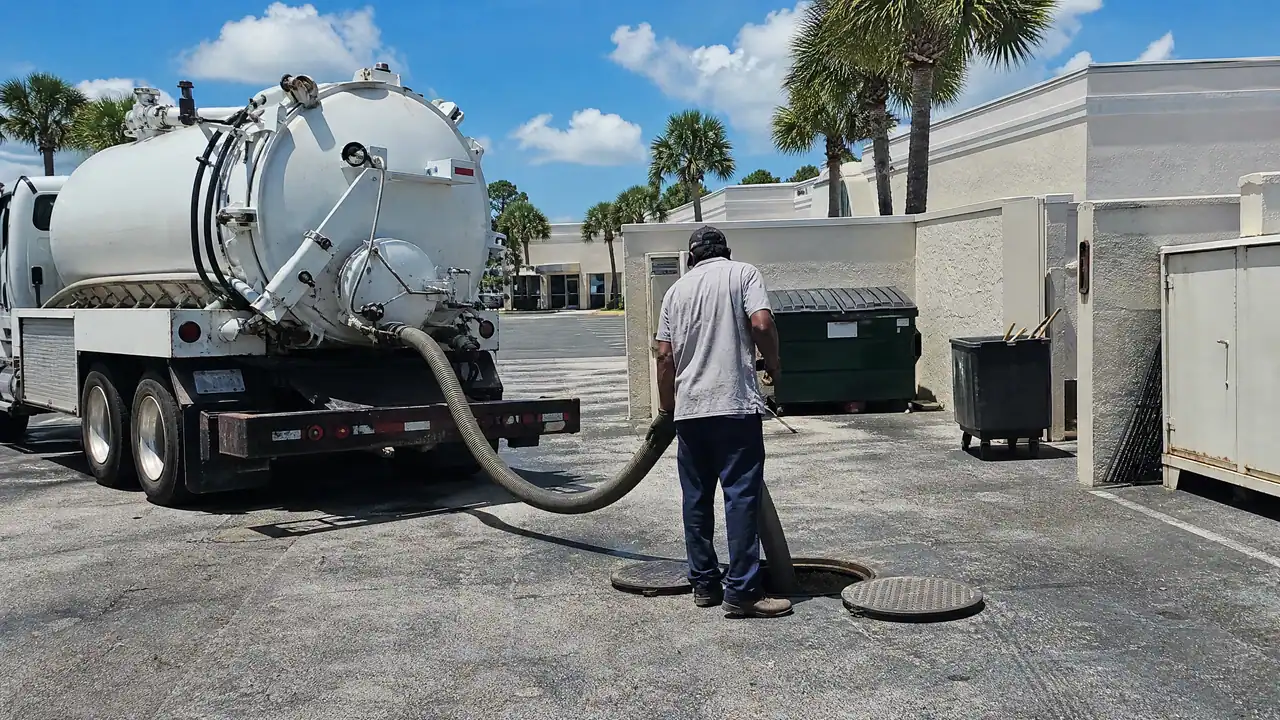
Grease Trap Cleaning Tampa pumps and cleans outdoor grease interceptors for restaurants, hotels and shared plazas across Tampa, Hillsborough, Pinellas and Pasco. A grease interceptor pumping visit removes everything in the tank (floating grease, gray water and settled solids), scrapes the walls and baffles, and ends with a signed manifest you keep for your inspector.
Under the City of Tampa's definition, an outdoor interceptor holds 750 gallons or more. How often yours has to be pumped depends less on its size than on where the kitchen sits. The City of Tampa sets no fixed number of days. Unincorporated Hillsborough and Pasco allow up to 90. Pinellas County, St. Petersburg and Largo expect roughly monthly service.
What happens on the first visit
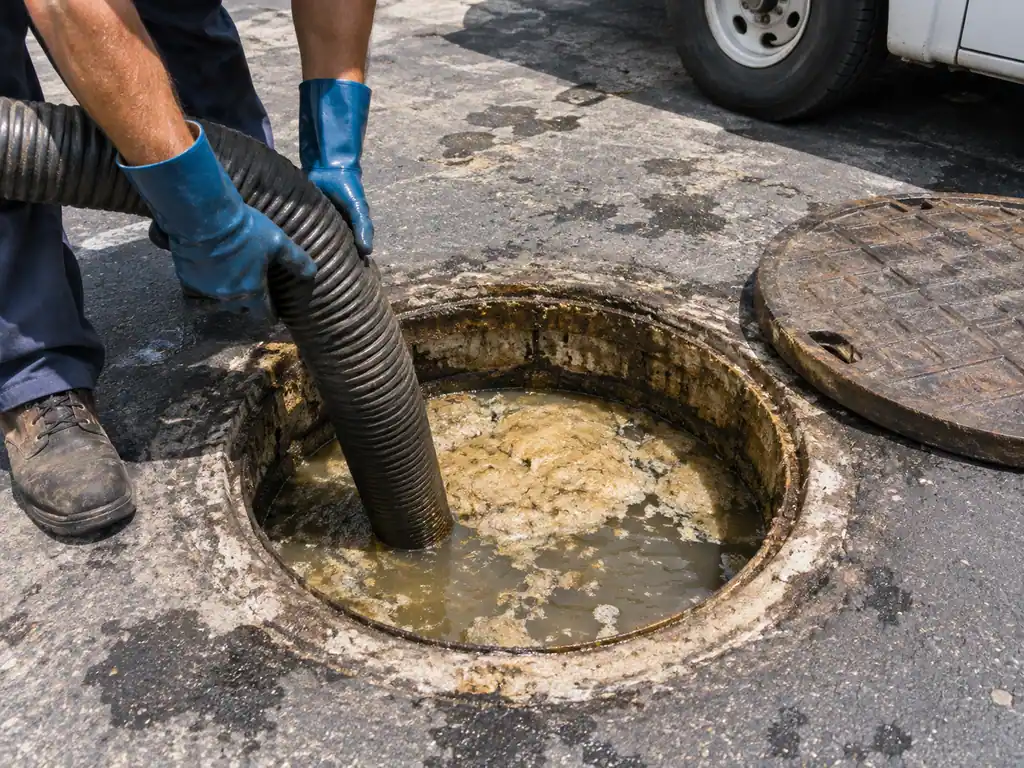
The first visit is a pump-out and an assessment in one trip. Expect four things:
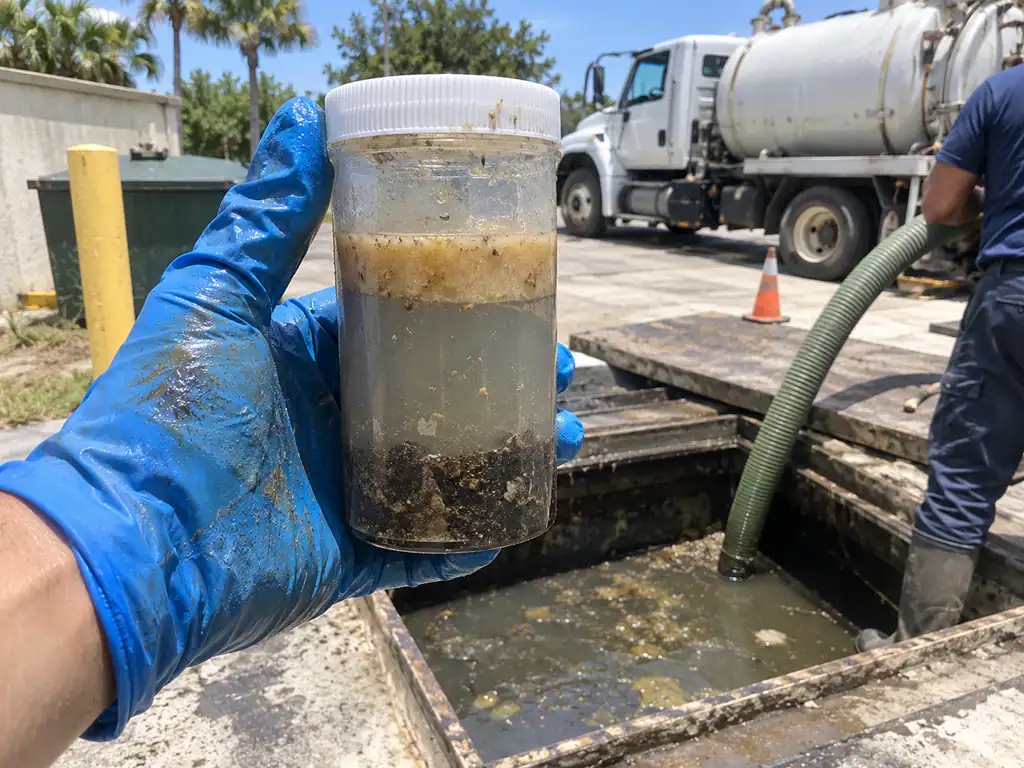
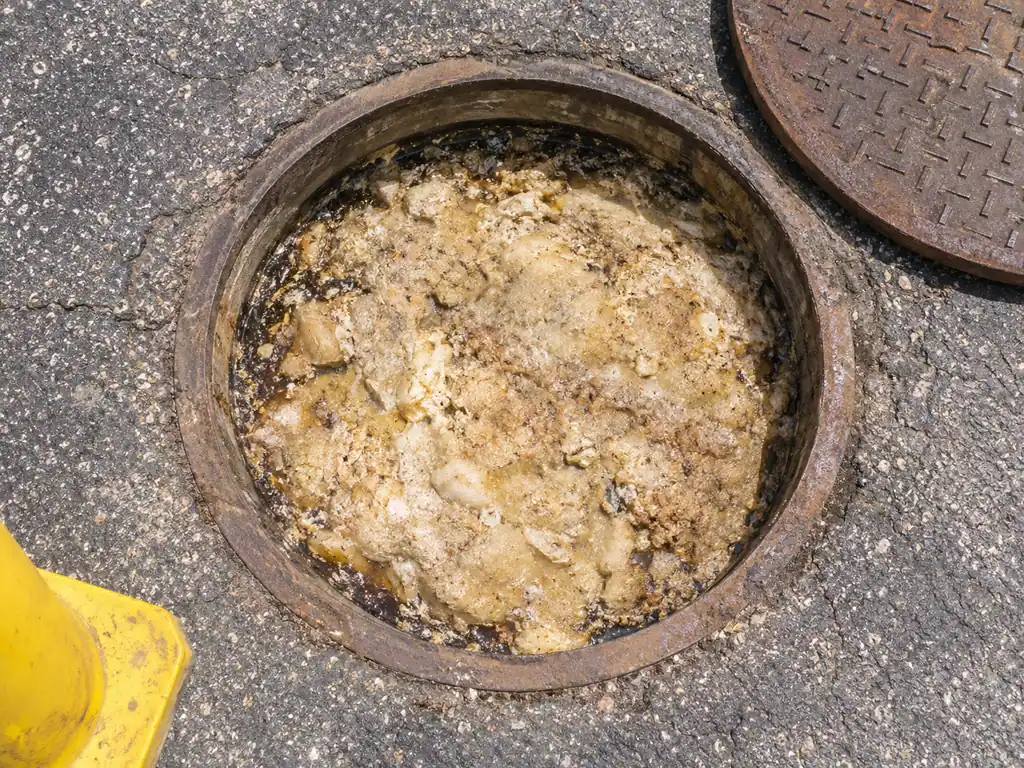
- Measure before pumping. We open every lid and record the depth of the floating grease cap and the settled solids at the outlet side. That number tells you whether your current schedule is keeping you under your jurisdiction's limit.
- Pump to empty. Everything comes out: grease cap, gray water and bottom solids. Nothing goes back in.
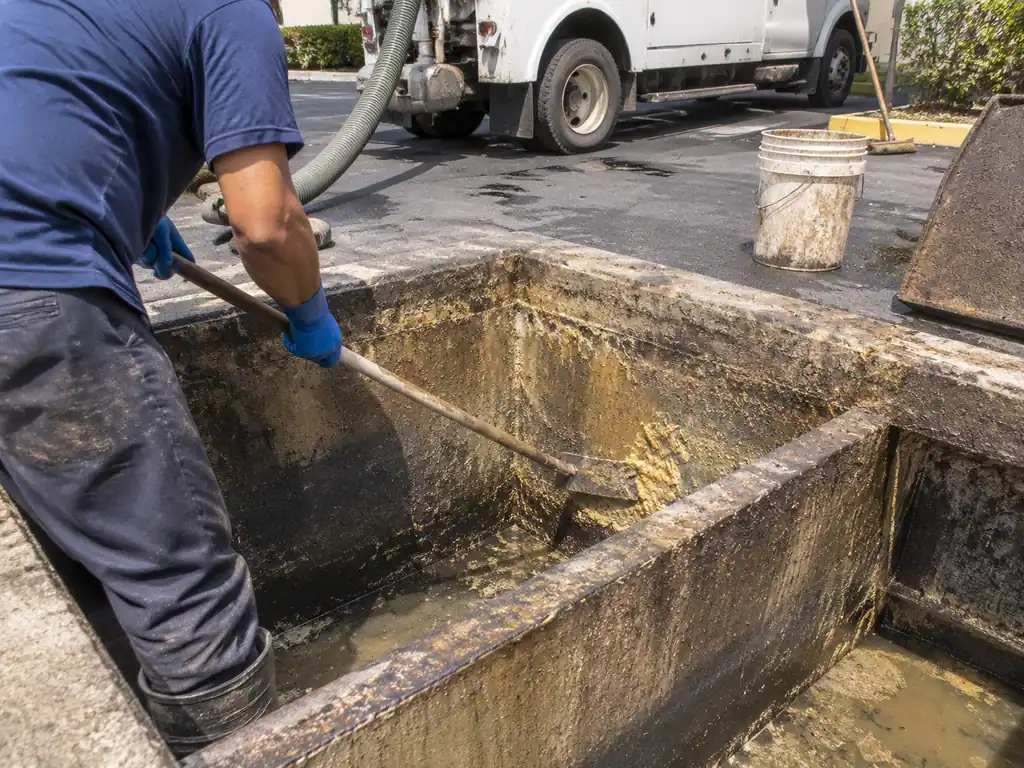
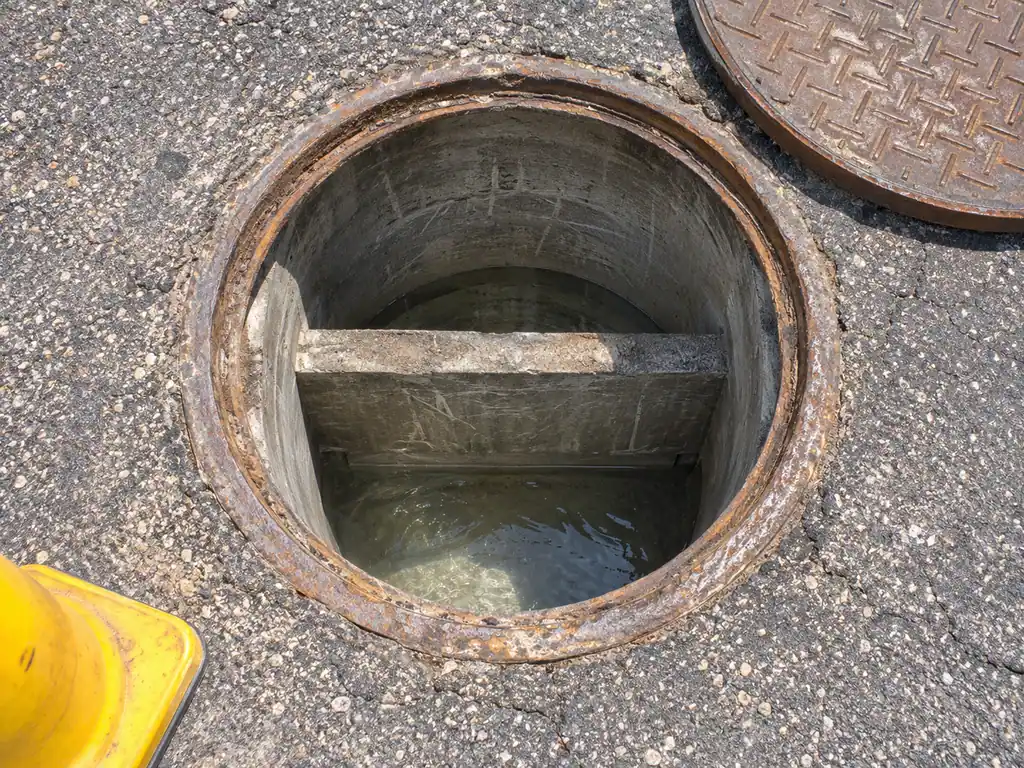
- Scrape and inspect. Walls, baffles and piping are scraped, and the inlet and outlet tees, baffle wall and lids are checked for cracks or missing parts.
- Document. You get a signed manifest and a written note of anything that needs repair, plus a recommended date for the next pump-out.
How often a grease interceptor must be pumped in Tampa Bay
There is no single Florida pumping interval. State law (F.S. 403.0741) governs how grease is hauled and documented, not how often. The schedule comes from whichever city or county runs the sewer your kitchen drains into, and a "Tampa" mailing address does not always mean City of Tampa rules.
| Where the kitchen drains | Interval | The rule |
|---|---|---|
| City of Tampa | No fixed days | Pump before solids pass the outlet invert (~8 in), grease and solids exceed 25% of capacity, the unit stops retaining grease, a backup occurs, or sanitary waste enters. Tampa Code Ch. 26 Art. VII, Sec. 26-306 |
| Hillsborough County (unincorporated) | At least every 90 days | Serviced at least every 90 days; contents never over 25% of wetted volume; alternate schedules by individual approval. Hillsborough County Grease Management FAQ (Ch. 120 / Ord. 06-31 Art. VII) |
| City of Temple Terrace | No fixed days | Pump when solids pass the outlet invert (~8 in), grease and solids exceed 25%, or the unit stops retaining grease. Temple Terrace Code Sec. 22-304 |
| Pinellas County Utilities | At least every 30 days | Pumped at least every 30 days; grease layer under 6 in and solids under 8 in; variance never over 180 days, voided if missed, not transferable. Pinellas County Code Sec. 126-613 |
| City of St. Petersburg | At least every 30 days | Pumped at least monthly; variance fee $275, maximum 180 days. City of St. Petersburg FOG Best Management Practices Manual |
| City of Clearwater | Set by the city | In-ground interceptors monitored at least every 90 operational days; the Public Works Administrator sets each facility's pumping schedule; alternate frequencies on request; pump until empty and clean walls, baffles and pipes. Clearwater Code Sec. 32.189 |
| City of Largo | At least every 30 days | Contents removed once per 30 operational days unless the control authority approves an alternate frequency. Largo Code Sec. 23-120 |
| Pasco County Utilities | At least every 90 days | Cleaned and pumped every 90 days, or sooner once FOG and food sludge reach 20% of volume; pump until empty and clean walls, cross pipes, inlet and outlet. Pasco County Code Sec. 110-174 |
| State of Florida | No fixed days | No pumping frequency set. Haulers may not return grease waste or graywater to the trap and must dispose at a permitted facility. F.S. 403.0741; F.A.C. 62-705 |
Two rules apply almost everywhere on top of the day count: pump before grease and solids take up a quarter of the tank (one-fifth in Pasco), and pump after any backup. A busy kitchen on a 90-day county rule can still need monthly service to stay under 25%.
What a full pump-out includes, and what decanting skips
Tampa's ordinance spells out what a pump-out means: "complete removal of all contents, including floating materials, gray water, bottom sludge, and solids," plus scraping "the walls, floors, baffles, and all piping" (Tampa Code Sec. 26-306). Pinellas County bans decanting, skimming and backwashing outright. Since July 2022, Florida law has also barred any hauler from returning grease waste or gray water to the tank.
Decanting, where the water is pumped back after the grease is skimmed, makes a truck go further. It also leaves solids behind, so the 25% line comes back sooner and the outlet keeps clogging. A full pump-out costs more per visit, and it is the only version that actually resets the tank.
The same ordinance makes the hauler responsible for checking the interceptor during or right after pumping and telling the owner in writing if anything is not working. That written note is worth keeping: it starts your repair timeline before an inspector does.
Grease interceptor or grease trap? Check before you book
The City of Tampa defines a grease trap as a unit inside the building rated at 50 gallons per minute or less, and an interceptor as an outdoor, in-ground tank rated above 50 gpm or holding 750 gallons or more. The difference matters. Indoor traps have to be opened and cleaned at least weekly in most local programs, while interceptors run on longer, condition-based schedules and must be pumped by a registered hauler.
If the unit sits under a sink or in the floor of the kitchen, you want indoor grease trap cleaning instead. If several restaurants share one tank behind a plaza, see shared grease interceptor service.
What's included
- Every lid opened; grease and solids depth measured and recorded
- Pumped to empty, with no decanting or water returned
- Walls, baffles and piping scraped
- Inlet and outlet tees checked for flow and damage
- Written note of any cracked baffle, missing tee or damaged lid
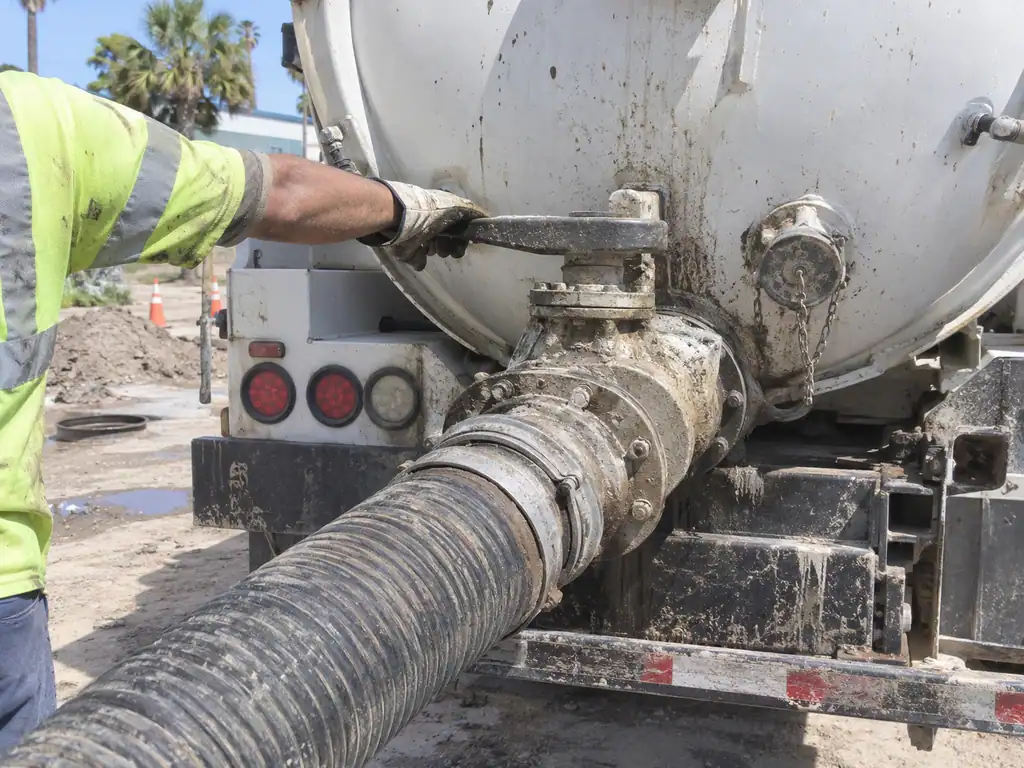
- Waste hauled to a permitted disposal facility
- Signed manifest with the disposal ticket number
- Next pump-out date set by your rule and fill rate
Pricing and payment
Grease interceptor pumping is priced per visit, by tank size, how full it is, how far the hose has to run, and the disposal fee. Typical Tampa Bay ranges are below, with how strong the evidence is for each. Ask for a written quote before any work starts. Prices on this site are typical market ranges, not quotes.