Skip to content

Hotel Kitchen Grease Trap Cleaning in Tampa Bay

Restaurant, banquet and room-service kitchens on one schedule, booked around the events calendar, with paperwork for engineering and the inspector.

  • Quotes by phone
  • Published price ranges
  • Signed manifest every visit
  • Hillsborough, Pinellas & Pasco
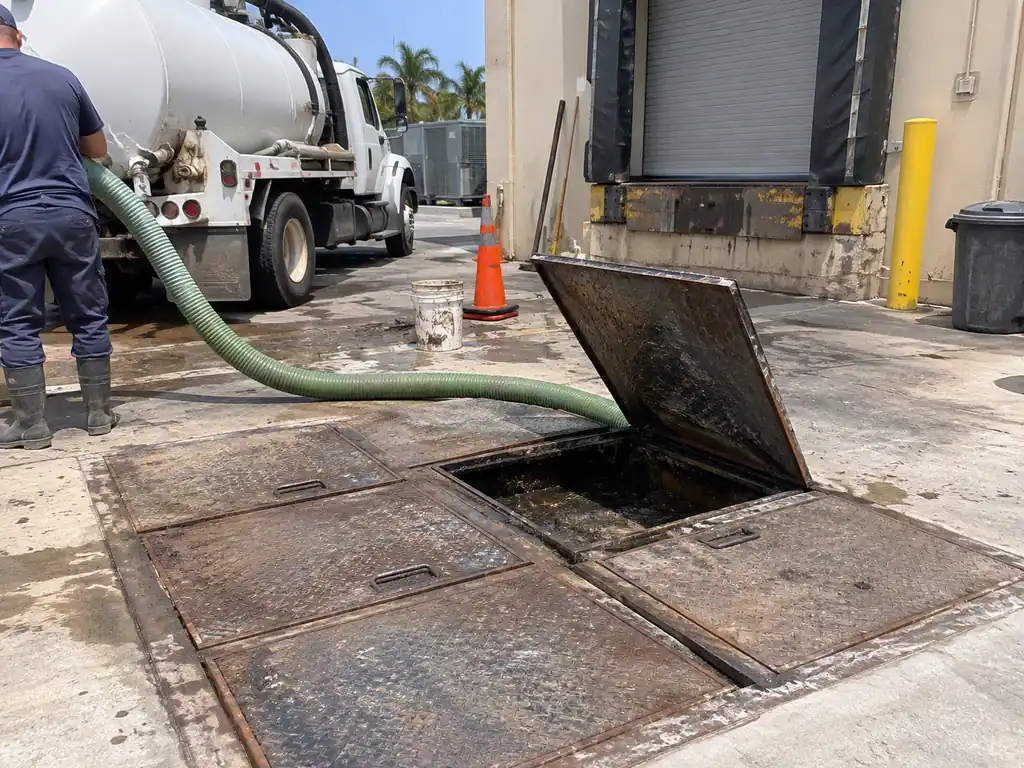
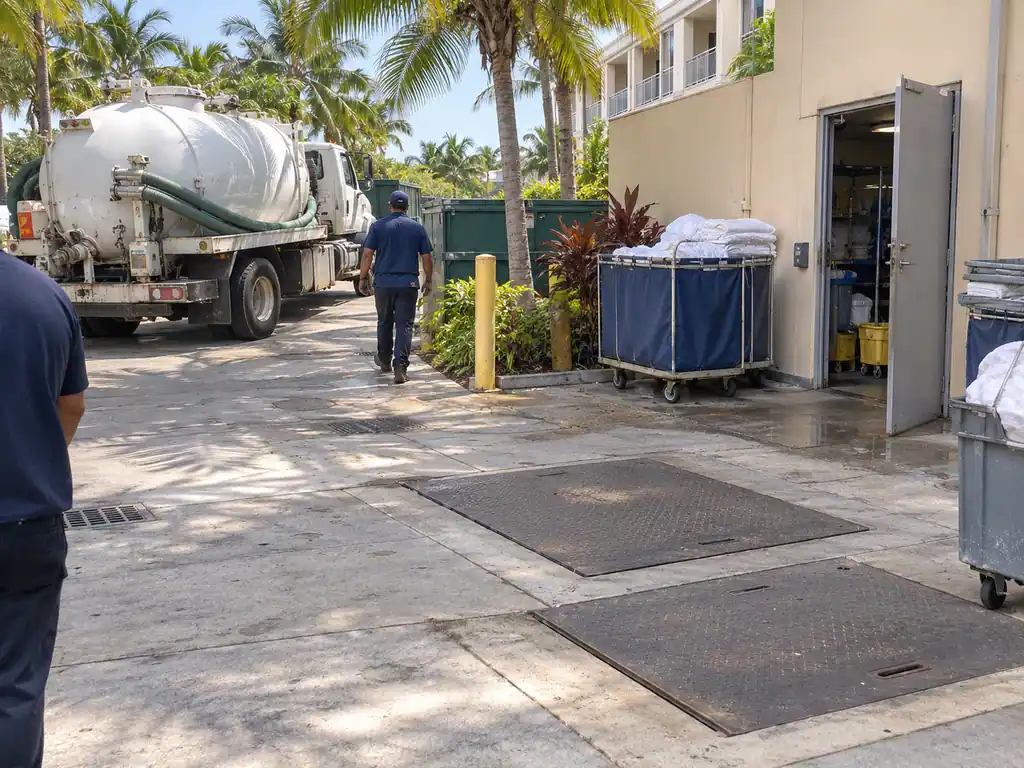
Grease interceptor pump-out at a Tampa Bay hotel loading dock with an unmarked vacuum truck

Last updated:

Grease Trap Cleaning Tampa provides hotel kitchen grease trap cleaning for hotels, resorts and conference venues across Tampa, Hillsborough, Pinellas and Pasco. A hotel kitchen grease trap system is rarely one unit. There are indoor traps in each outlet, often a large outdoor interceptor taking the combined flow, and a banquet calendar that can double the load in a weekend.

What happens on the first visit

  1. Walk the system. Every outlet's indoor traps and every interceptor, with the routes between them.
  2. Pump and measure. Depths recorded on each unit to set intervals.
  3. Plan around the calendar. Pump-outs placed before big events and after heavy weekends, not in the middle of them.
  4. Set up the paperwork. Manifests and logs for the engineering office and whichever program inspects the property.

Why hotel kitchens fill unevenly

A restaurant's load is fairly steady. A hotel's isn't. A 300-cover banquet, a holiday brunch or a sold-out weekend can put more grease into an interceptor in two days than a quiet week does. A fixed calendar interval misses those spikes. Measuring depth at each visit, and booking extra pump-outs around the events calendar, keeps the unit under its limit when the load is heaviest. See grease trap maintenance plans.

Which rule applies to your property

Beach and bayfront hotels sit under different programs a few miles apart. Clearwater sets each facility's pumping schedule itself and wants every pump-out reported within five business days. Unincorporated Pinellas County requires interceptors pumped at least every 30 days. St. Petersburg expects monthly pumping and quarterly reports. Tampa's rule is condition-based. Confirm your address in the rules-by-jurisdiction guide.

What's included

  • Every outlet's traps and interceptors mapped
  • Depths measured on every unit
  • Pump-outs placed around the events calendar
  • Full pump-out, no water returned
  • Manifests for engineering and the inspector
  • Report deadlines tracked by jurisdiction
  • Damage noted in writing
  • One point of contact for all units

Pricing and payment

Hotels are usually billed per visit across all units on a maintenance plan, at the rate for each unit's size. Ask for a written quote before any work starts. Prices on this site are typical market ranges, not quotes.
What hotel kitchen grease trap cleaning costs in Tampa Bay

Typical market ranges per visit, with the strength of the evidence shown for each.

  • Indoor / under-sink trap (20–100 gal), per cleaning

    $150–$350

    per visit

    Low confidence

    greasetrapflorida.com Tampa Bay range $175–300 (directory, no published methodology)

  • Interceptor 1,500–2,500 gal, per pump-out

    $500–$850

    per visit

    Medium confidence

    Florida size table $500–800; Brevard public bid ≈$300–$2,750 (wide spread)

  • Interceptor 2,500+ gal, per pump-out

    $700–$1,200

    per visit

    Low confidence

    Florida size table; Miami dispatch directory $600–1,300

What changes the price

  • Tank size and how full it is
  • Hose run and access from the truck
  • Disposal fee (sometimes included)
  • After-hours or emergency timing (+20–100%)

Estimate your annual cost

DIY vs the cheapest hauler vs doing it properly

Comparison of DIY, cheapest hauler and proper service
Factor Do it yourselfCheapest haulerDone properly
What's legal Small indoor traps only, with a written protocol (Tampa) or under 50 lb capacity (Hillsborough County)Pump-and-return is banned statewide, but still happensFull pump-out to empty, as Florida law and every local program require
What gets removed Floating grease you can scoopOften just the top layer and some waterFloating grease, gray water, bottom solids, and buildup scraped off walls and baffles
Paperwork Your own log entryA receipt, sometimesSigned manifest with volume, condition and disposal ticket number
Checked against the rule Rarely measuredNot measuredGrease and solids depth measured against your jurisdiction's limit
Problems spotted Only what you can seeUsually not reportedCracked baffles, missing tees and flow-control issues noted in writing
Real cost Staff time; risk of a failed inspectionLow price, then repeat clogs and re-inspection feesA known price per visit on the schedule your rule sets

How hotel kitchen grease trap cleaning works

  1. Step 1: First call

    Tell us the kitchen's address, what kind of unit you have, and when it was last pumped. We tell you which rule applies and give a price range on the phone.

  2. Step 2: On-site check

    We open the lids, measure grease and solids depth, and look at the baffles, tees and outlet. Ask for a written quote before work starts.

  3. Step 3: Full pump-out

    The unit is pumped to empty, walls and baffles are scraped, and the inlet and outlet are checked for flow.

  4. Step 4: Manifest and schedule

    You get a signed manifest for your logbook and a suggested date for the next visit, set by your rule and how fast the unit filled.

What the work looks like

Illustrative photos of the work described on this page.

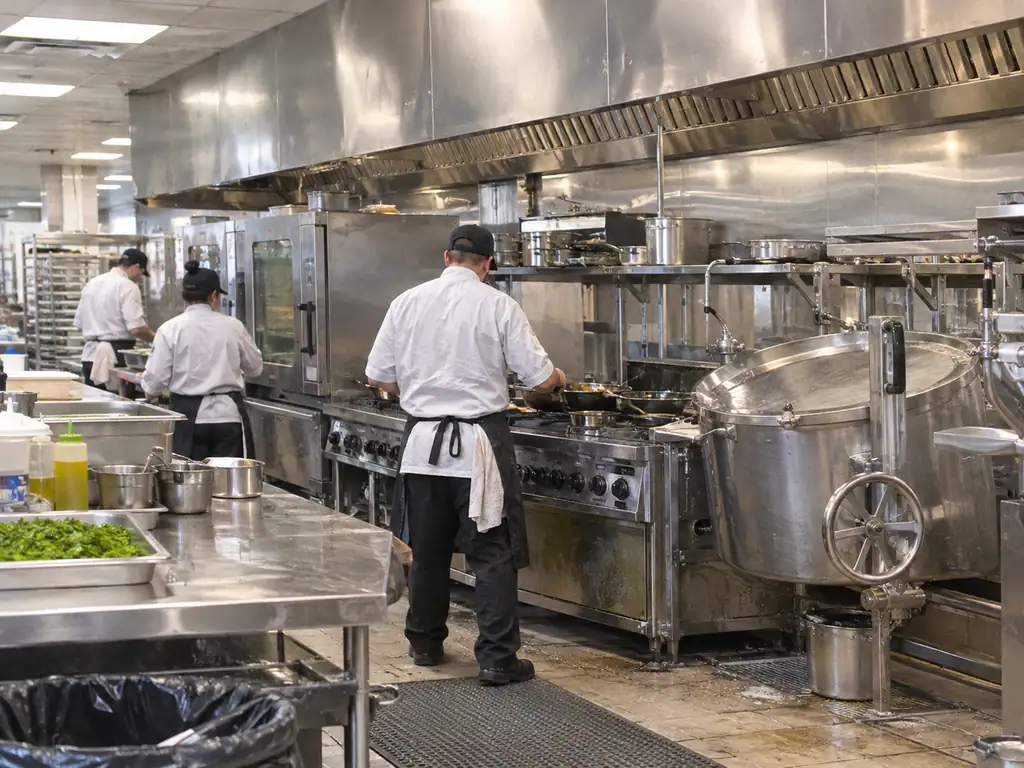
  • Large hotel banquet kitchen with a long stainless cooking line
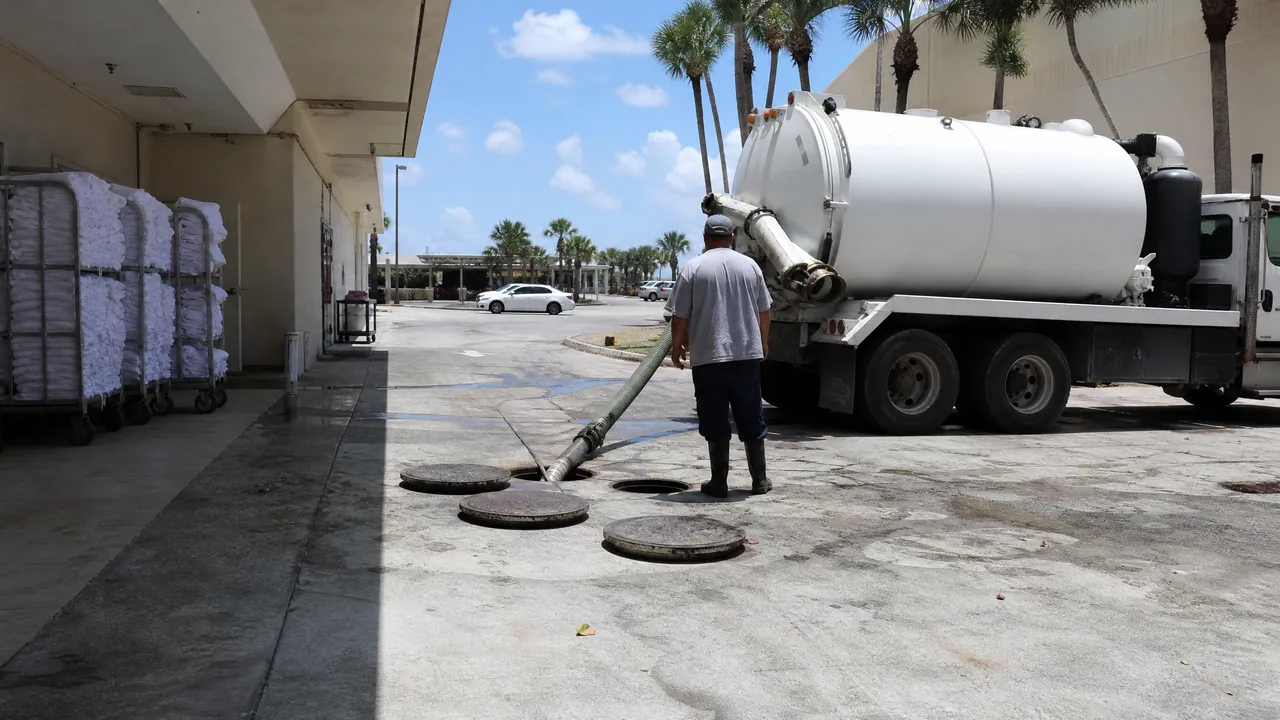
  • Resort back-of-house service yard with grease interceptor lids
  • Large multi-lid grease interceptor at a hotel loading dock
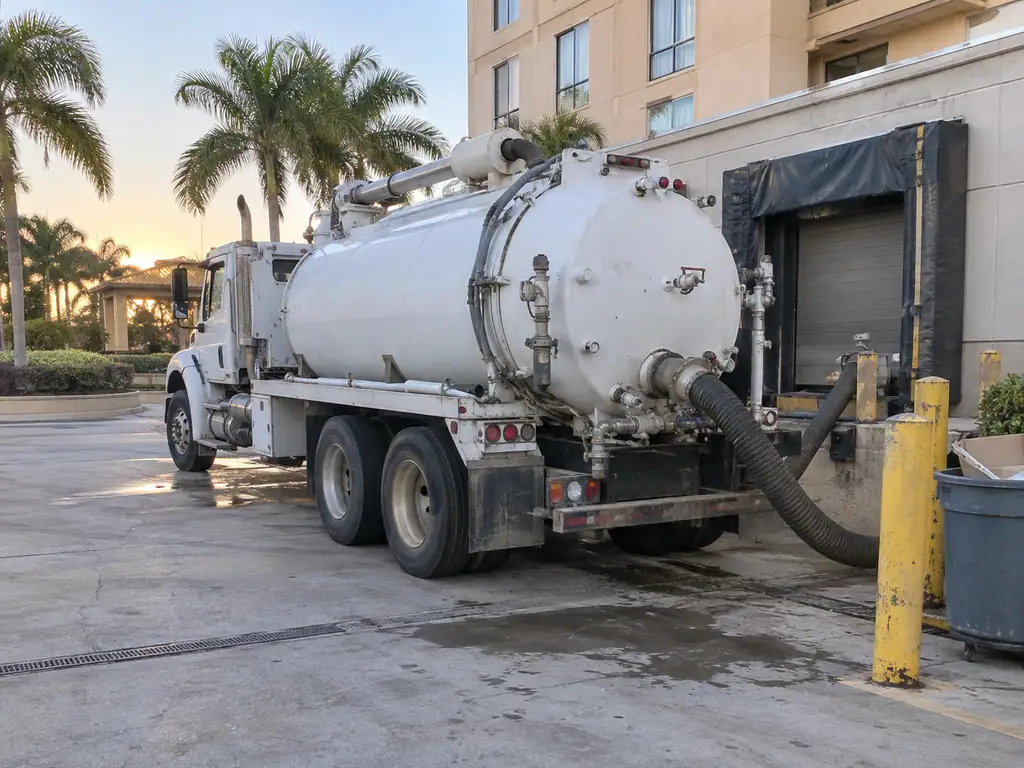
  • Unmarked vacuum truck at a hotel loading dock in the early morning

Hotel Kitchen Grease Trap Cleaning questions

How often should a hotel kitchen grease interceptor be pumped?

No later than the rule for your address, and with extra pump-outs around heavy event periods. Measured depths at each visit show whether the base interval holds.

Can pump-outs be scheduled around banquets?

Yes. Visits are placed before large events and after heavy weekends, so the interceptor isn't full when the banquet kitchen is busiest.

Do all our outlets need separate records?

Each unit should have its own entries in the logbook. One manifest per pump-out visit can cover several units when they're serviced together.

We're in Clearwater. What's different?

Clearwater's Public Works Administrator sets your pumping schedule, interceptors must be monitored at least every 90 operational days, and each pump-out is reported to the city within five business days.

Do I get paperwork I can show an inspector?

Yes. Every pump-out ends with a signed service manifest showing the date, the volume removed, the condition of the unit, confirmation that nothing was returned to it, and the disposal facility's ticket number. Florida law (F.S. 403.0741) requires you to keep that manifest on site for at least a year, and some local programs ask for three.
Call (727) 476-9241 · Talk to a person about your trap