Last updated:
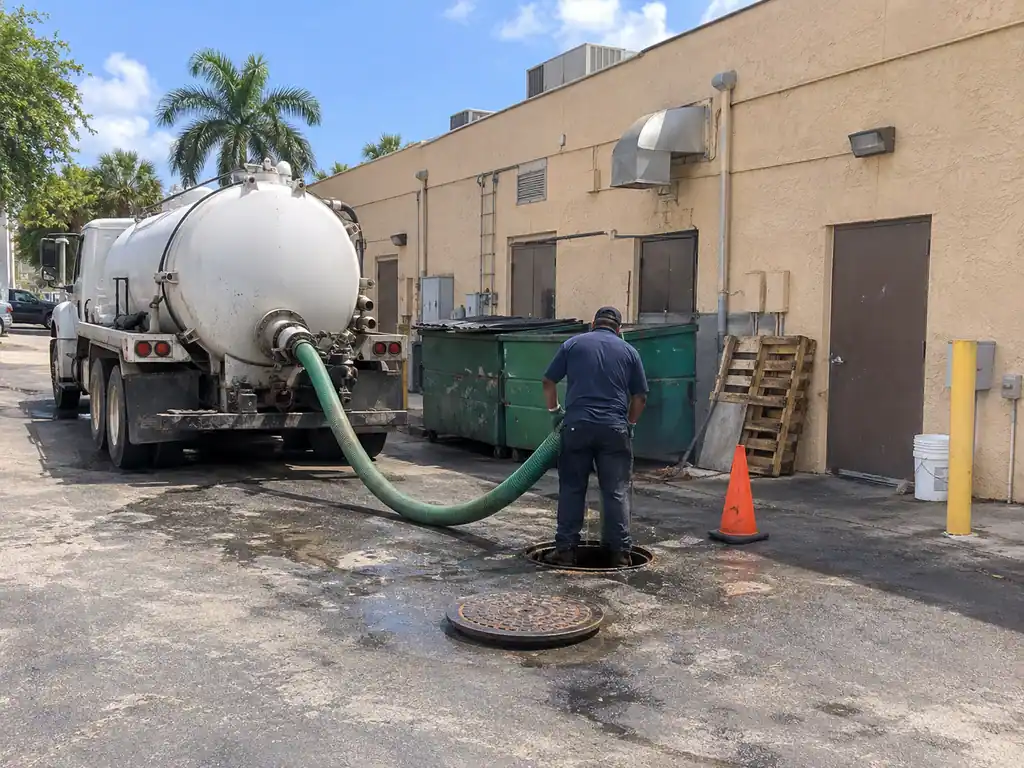
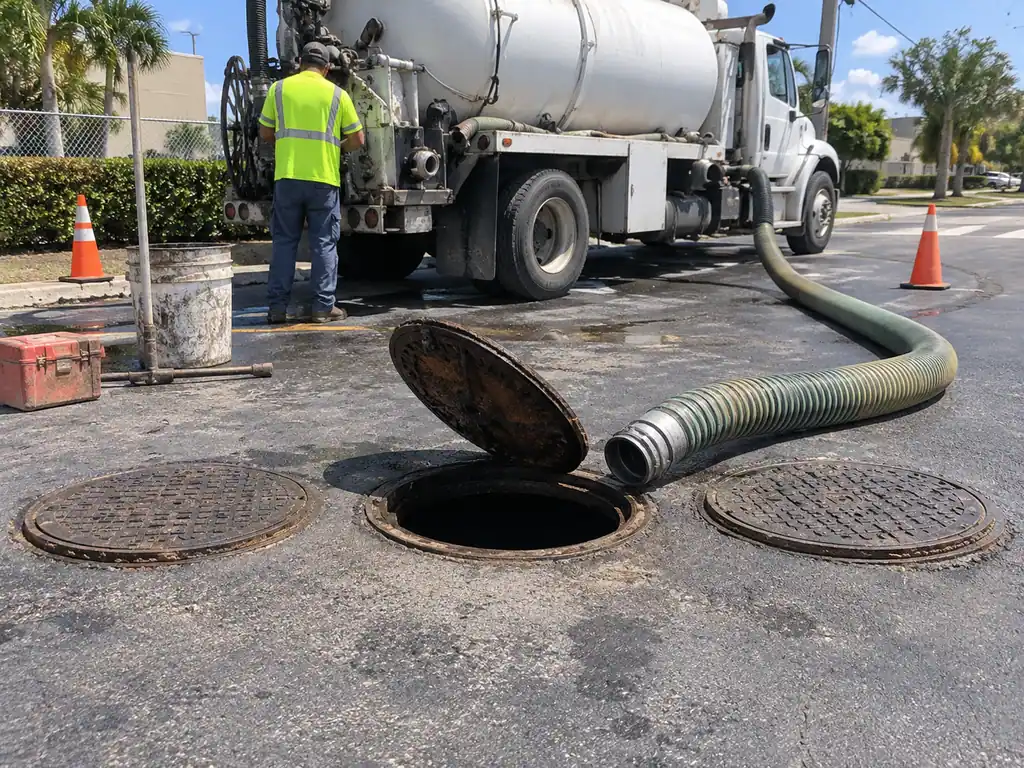
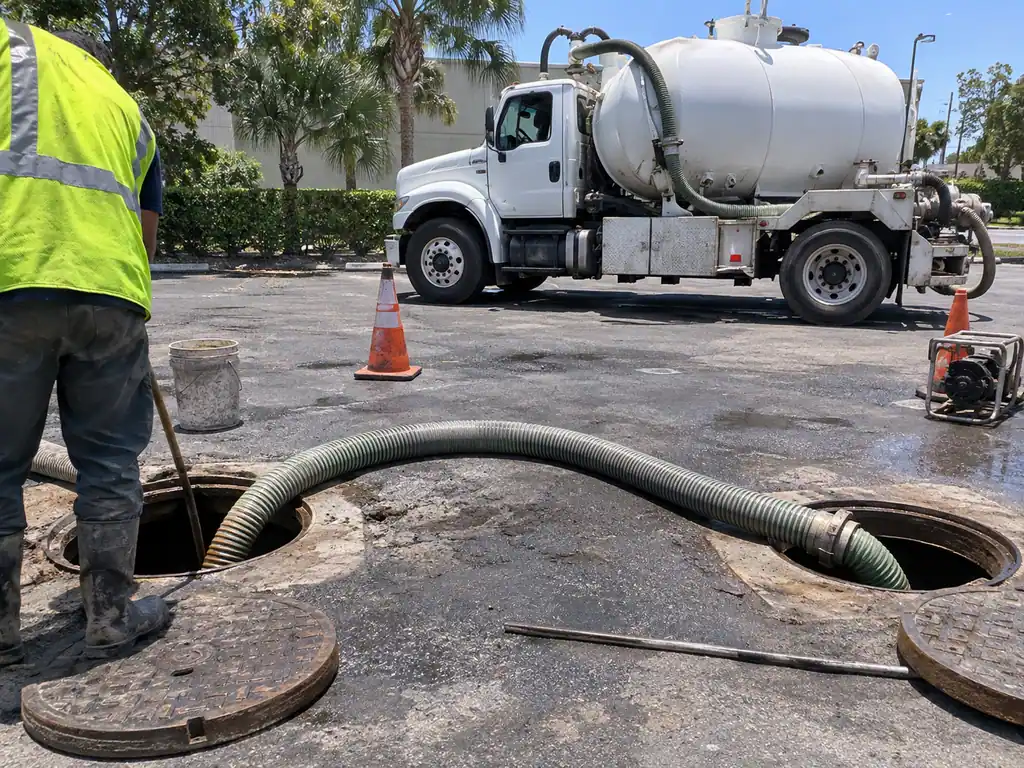
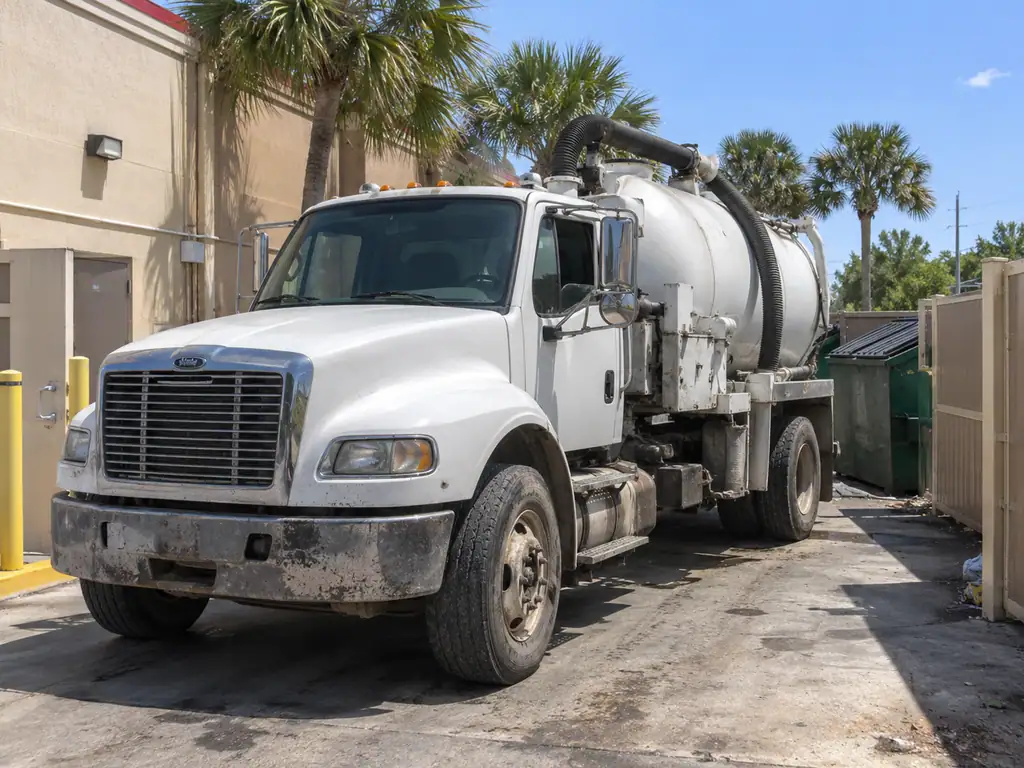
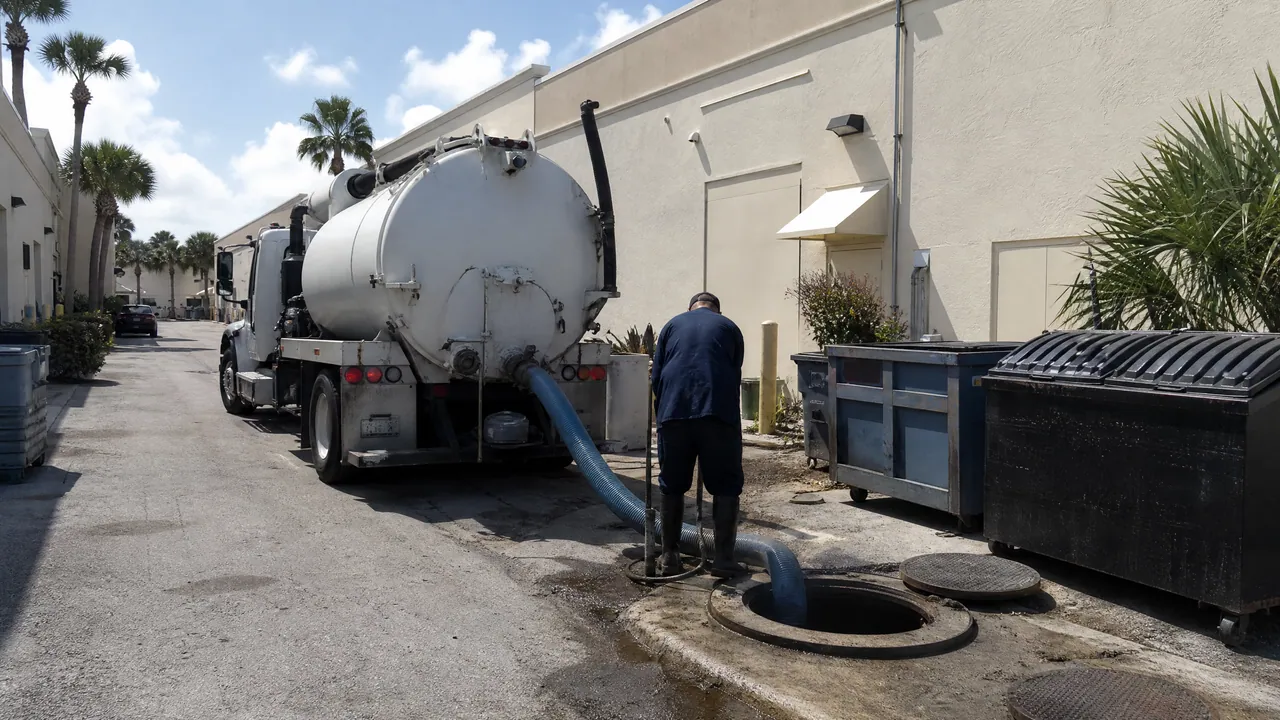
Grease Trap Cleaning Tampa provides shared grease interceptor service for shopping plazas, food halls and mixed-use buildings across Tampa, Hillsborough, Pinellas and Pasco. A shared grease interceptor takes wastewater from several food tenants at once, so it fills on the heaviest user's schedule and leaves everyone exposed when it backs up.
The hard part isn't the pump-out. It's deciding who books it, who pays, and whose name is on the logbook when the inspector arrives.
What happens on the first visit
- Map the connections. Which tenants drain to the interceptor, and which have their own indoor traps as well.
- Pump and measure. A full pump-out, with depths recorded to set the interval.
- Set one schedule. Based on the rule for the address and the combined fill rate.
- Agree the paperwork. One manifest per visit, with copies for the property manager and each tenant who needs them.
Who is responsible for a shared grease interceptor?
Largo's code answers this directly. Where two or more food service facilities share a common grease interceptor, the responsible owner is the person who owns or takes control of the interceptor, or who owns the property it sits on (Largo Code Sec. 23-120). Elsewhere, the lease usually decides. Read it for who maintains "grease traps" and "interceptors" (they are often treated differently), and who pays for pumping versus repairs.
Whatever the lease says, inspectors deal with the facilities they inspect. A tenant whose kitchen drains to an overdue shared interceptor can be the one holding the violation.
One schedule for several kitchens
A shared interceptor fills at the combined rate of every tenant, so its interval is usually shorter than any one restaurant would need alone. The rule for the address still sets the maximum: monthly in Pinellas County, St. Petersburg and Largo, 90 days in unincorporated Hillsborough and Pasco, and condition-based in Tampa. Measured depths at each visit show whether the interval holds, and give a fair basis for splitting cost if the lease allows it. See grease interceptor pumping.
What's included
- Tenant connections mapped
- Full pump-out with depths recorded
- One schedule for the shared unit
- Manifest copies for owner and tenants
- Rule for the address confirmed
- Fill data for fair cost-sharing
- Damage reported in writing to the owner
- Indoor tenant traps on the same visit if wanted
Pricing and payment
Billed to whoever books the service (property manager, association or lead tenant), at the rate for the interceptor's size. Ask for a written quote before any work starts. Prices on this site are typical market ranges, not quotes.