Last updated:
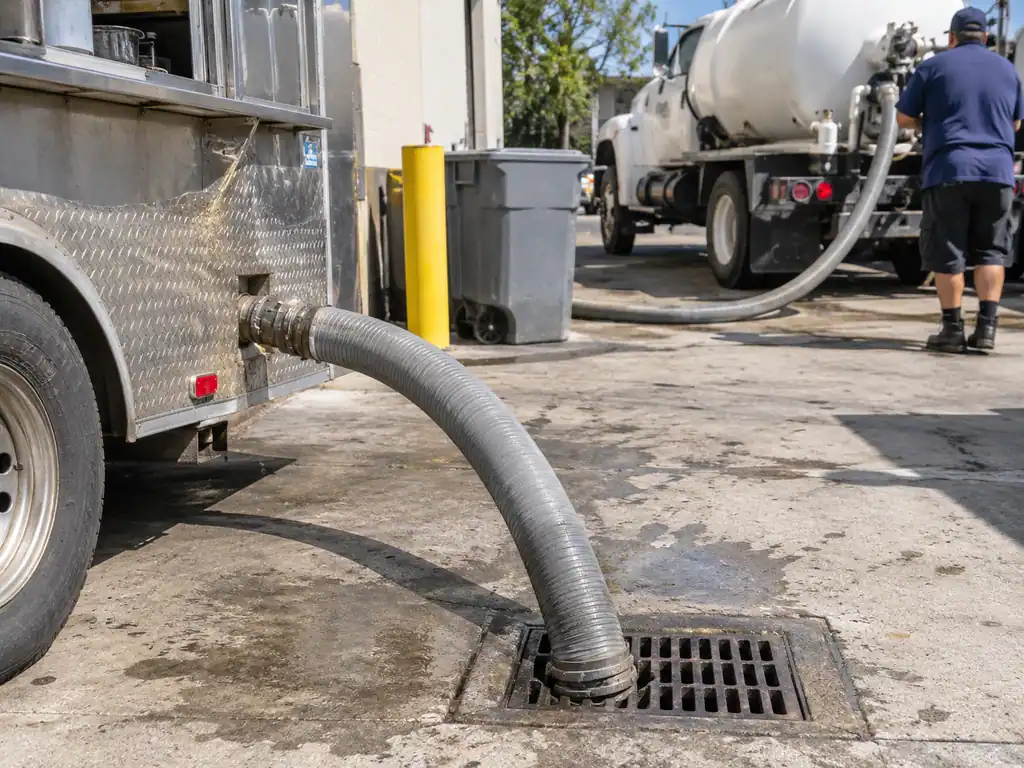
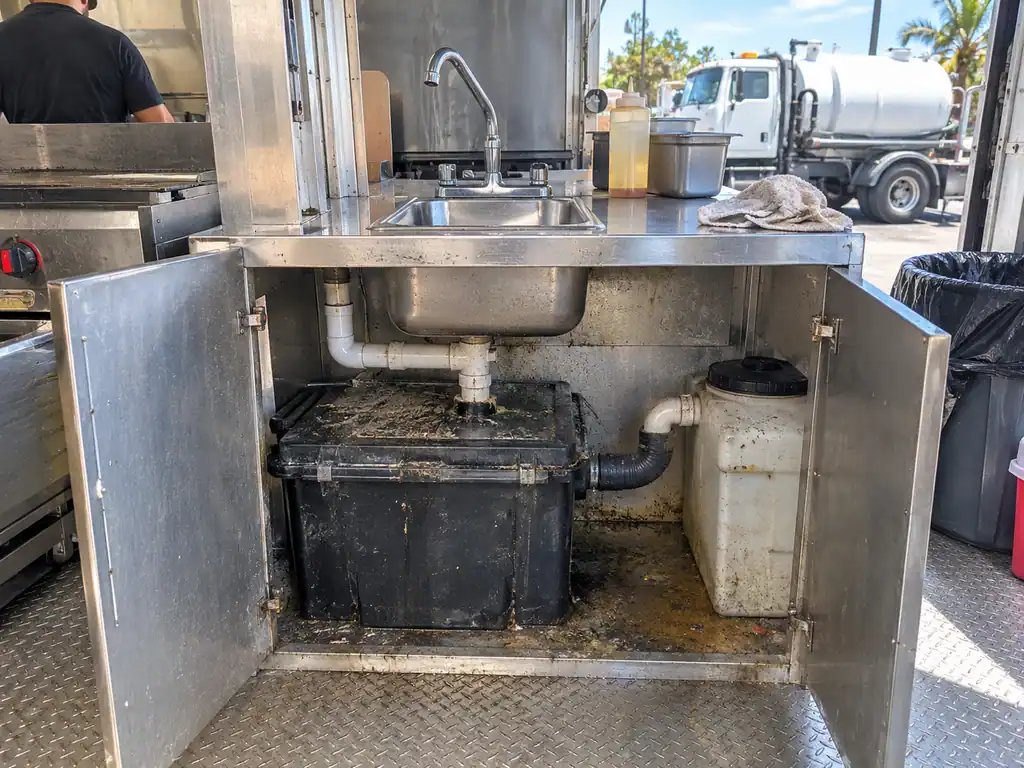
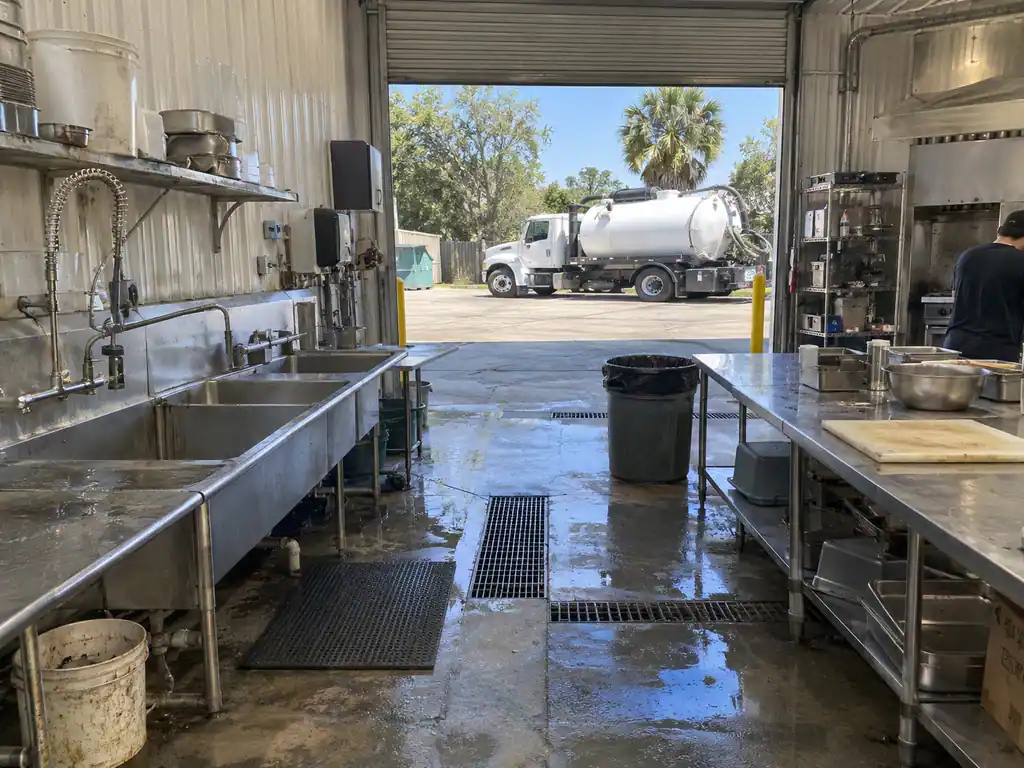
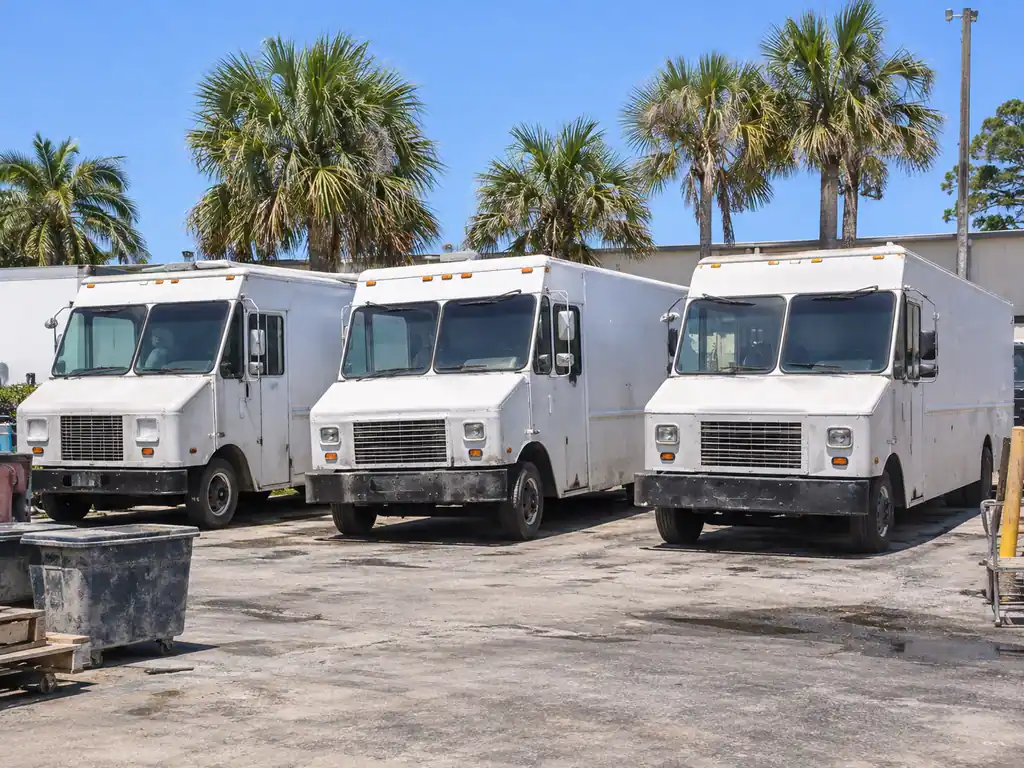
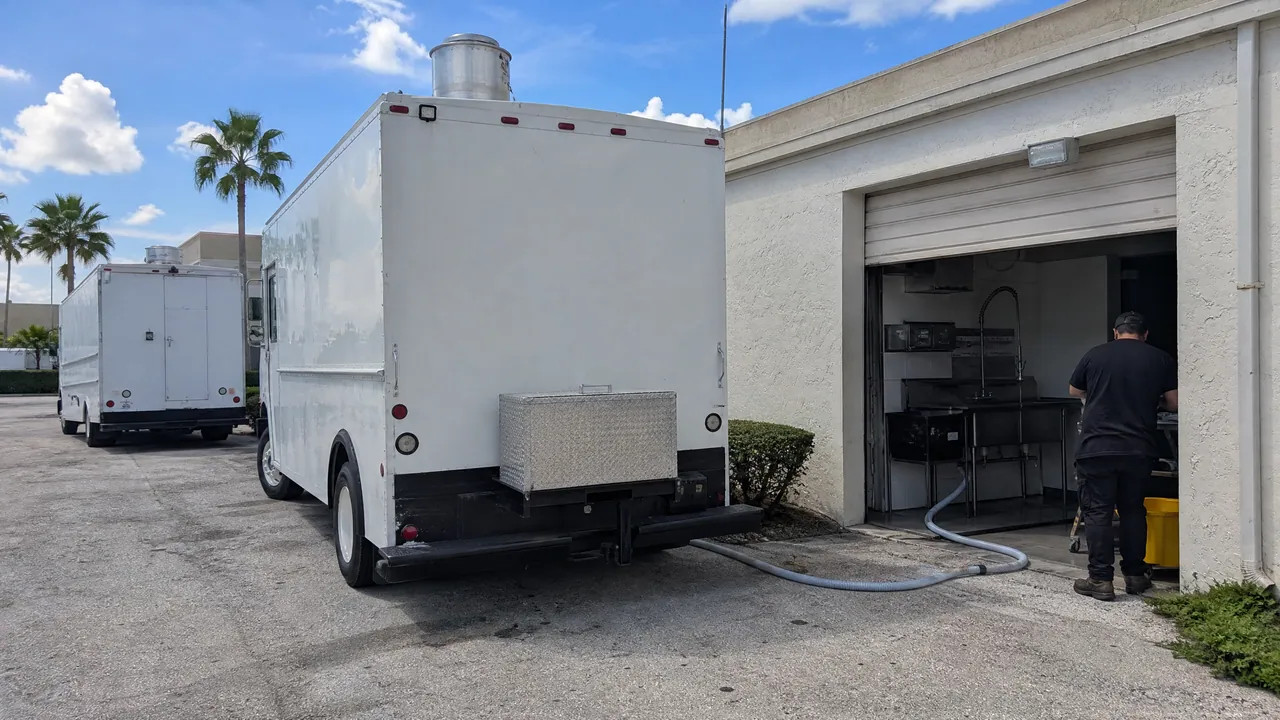
Grease Trap Cleaning Tampa provides food truck grease trap cleaning for mobile food vendors and the commissary kitchens that service them across Tampa, Hillsborough, Pinellas and Pasco. Food truck grease trap cleaning covers two places grease ends up: a small interceptor on the truck between the sink drains and the wastewater tank, and the trap or interceptor at the commissary where that tank is emptied.
What happens on the first visit
- Find where the grease goes. On the truck, at the commissary, or both.
- Clean the onboard unit. Emptied, scraped and checked so it doesn't send grease into the wastewater tank.
- Service the commissary trap. Cleaned or pumped on the schedule its own jurisdiction sets.
- Log it. A signed record for the truck and for the commissary.
Does a food truck need a grease trap?
Florida licenses mobile food dispensing vehicles through DBPR's Division of Hotels and Restaurants and requires them to operate from an approved commissary with adequate facilities for liquid and solid waste disposal (F.A.C. 61C-4.0161). Trucks may not dump wastewater at a private residence. Local programs decide how the grease is caught. Safety Harbor's food-truck permit form, for example, requires wastewater to pass through a grease interceptor: either one built into the truck between the sink drains and the wastewater tank, or the commissary's interceptor.
Either way, the grease ends up in a trap that needs regular cleaning. On the truck it's small and fills fast. At the commissary it takes the load from every truck that dumps there.
Commissary kitchens
A commissary's trap or interceptor follows the rules of the jurisdiction it sits in. That means weekly cleaning for indoor traps in the City of Tampa and Pinellas County, and a 90-day maximum in unincorporated Hillsborough and Pasco. Several trucks emptying wastewater tanks into one unit can push it past 25% well before the calendar says it's due, so commissaries usually do best on a measured maintenance plan. For the commissary's own under-sink traps, see indoor grease trap cleaning.
What's included
- Onboard interceptor emptied and scraped
- Commissary trap or interceptor serviced
- Waste hauled to a permitted facility
- Signed record for the truck and the commissary
- Schedule set by the commissary's jurisdiction
- Fill rate tracked across trucks
- Fittings and lids checked
- No wastewater returned to any tank
Pricing and payment
Onboard units are priced like small indoor traps. Commissary units are priced by size. Ask for a written quote before any work starts. Prices on this site are typical market ranges, not quotes.