Skip to content

Grease Trap Odor Control for Tampa Restaurants

A rotten-egg smell in the kitchen or dining room has a cause. Find it (full trap, dry P-trap, failed lid seal or vent) and fix that, not the symptom.

  • Quotes by phone
  • Published price ranges
  • Signed manifest every visit
  • Hillsborough, Pinellas & Pasco
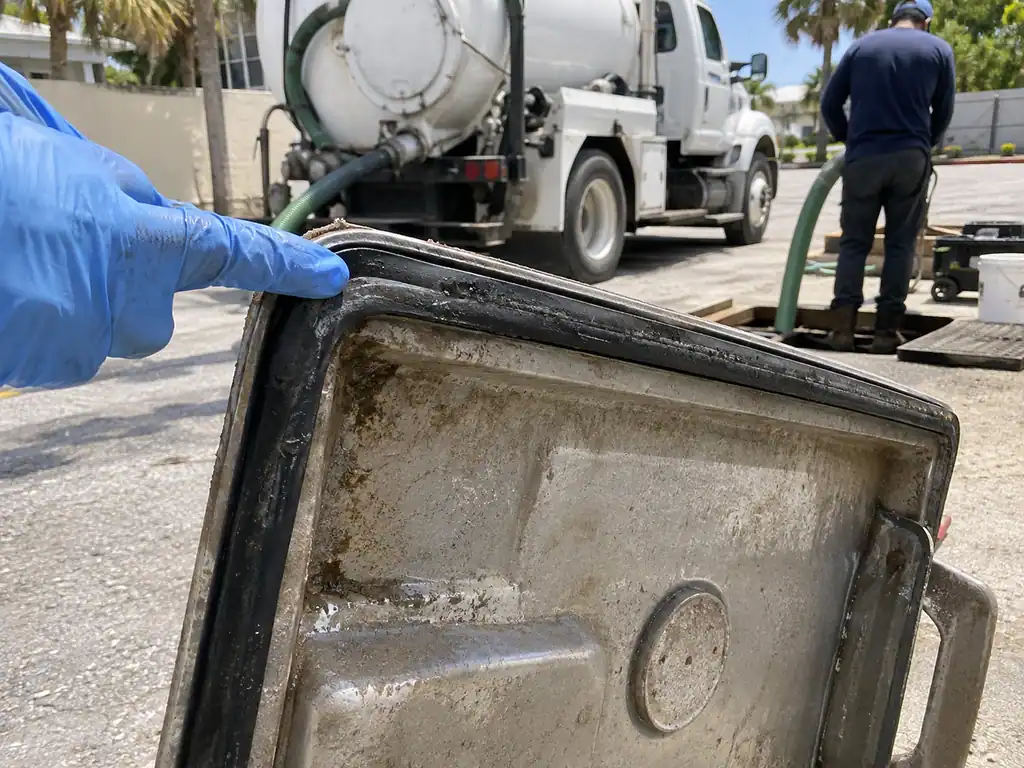
Technician fitting a new lid gasket on a stainless grease trap to stop odors in a Tampa restaurant kitchen

Last updated:

Grease Trap Cleaning Tampa provides grease trap odor control for restaurants and commercial kitchens across Tampa, Hillsborough, Pinellas and Pasco. Grease trap odor control starts with finding where the smell comes from. A neglected trap gives off hydrogen sulfide, the rotten-egg smell, but so does a dried-out floor drain, a lid that no longer seals, or a vent that ends in the wrong place.

Masking sprays and drop-in deodorizers treat the smell, not the source. In the City of Tampa, any chemical, enzyme or bacteria product added to a trap needs the grease inspector's approval first.

What happens on the first visit

  1. Trace it. Where is it strongest, when does it start, and does it follow a pump-out, a busy service or a quiet weekend?
  2. Check the trap. Depth measured. A trap past 25% is usually the answer, and a full pump-out fixes it.
  3. Check everything else. Floor-drain P-traps, lid gaskets, risers and the vent termination.
  4. Fix and confirm. Pump, re-seal or re-vent, then re-check.

Five sources of a grease trap smell

  1. A full or overdue trap. Decomposing grease and food solids release hydrogen sulfide. Fix: a full pump-out and a tighter schedule.
  2. A dry P-trap. A floor drain or sink that isn't used dries out, and sewer gas comes straight up. Fix: refill it with water. No pumping needed.
  3. A failed lid seal. A gasket that has hardened or a lid that doesn't sit flat lets gas into the kitchen.
  4. A vent problem. Tampa requires trap vents to end at least 6 inches above the flood-rim level or as the manufacturer specifies (Sec. 26-306(f)(2)). A blocked or misrouted vent pushes gas out through the trap.
  5. Smell right after a pump-out. Pumping disturbs the tank and releases trapped gas. It should clear within hours. If it lingers, check the lid and the vent.

More in why a grease trap smells like sewage.

Why chemical fixes cause trouble

Emulsifiers and grease cutters break grease into smaller droplets that pass through the trap and set again in the sewer line. Clearwater bans them outright (Sec. 32.189), and Tampa requires approval for any additive. A clean trap with good seals doesn't need a deodorizer. See enzymes vs pumping.

What's included

  • Smell traced to its source
  • Trap depth measured
  • Full pump-out if overdue
  • Floor-drain P-traps checked
  • Lid gaskets and risers checked
  • Vent termination checked
  • No masking chemicals
  • Re-check after the fix

Pricing and payment

Most odor calls end in a pump-out at the normal rate for the unit. Seal and vent fixes are quoted once found. Ask for a written quote before any work starts. Prices on this site are typical market ranges, not quotes.
What grease trap odor control costs in Tampa Bay

Typical market ranges per visit, with the strength of the evidence shown for each.

  • Indoor / under-sink trap (20–100 gal), per cleaning

    $150–$350

    per visit

    Low confidence

    greasetrapflorida.com Tampa Bay range $175–300 (directory, no published methodology)

  • Interceptor 1,000–1,500 gal, per pump-out

    $400–$650

    per visit

    Medium confidence

    Florida size table $400–600; Brevard public bid $0.20–$1.10/gal (≈$200–$1,650)

What changes the price

  • Tank size and how full it is
  • Hose run and access from the truck
  • Disposal fee (sometimes included)
  • After-hours or emergency timing (+20–100%)

Estimate your annual cost

DIY vs the cheapest hauler vs doing it properly

Comparison of DIY, cheapest hauler and proper service
Factor Do it yourselfCheapest haulerDone properly
What's legal Small indoor traps only, with a written protocol (Tampa) or under 50 lb capacity (Hillsborough County)Pump-and-return is banned statewide, but still happensFull pump-out to empty, as Florida law and every local program require
What gets removed Floating grease you can scoopOften just the top layer and some waterFloating grease, gray water, bottom solids, and buildup scraped off walls and baffles
Paperwork Your own log entryA receipt, sometimesSigned manifest with volume, condition and disposal ticket number
Checked against the rule Rarely measuredNot measuredGrease and solids depth measured against your jurisdiction's limit
Problems spotted Only what you can seeUsually not reportedCracked baffles, missing tees and flow-control issues noted in writing
Real cost Staff time; risk of a failed inspectionLow price, then repeat clogs and re-inspection feesA known price per visit on the schedule your rule sets

How grease trap odor control works

  1. Step 1: First call

    Tell us the kitchen's address, what kind of unit you have, and when it was last pumped. We tell you which rule applies and give a price range on the phone.

  2. Step 2: On-site check

    We open the lids, measure grease and solids depth, and look at the baffles, tees and outlet. Ask for a written quote before work starts.

  3. Step 3: Full pump-out

    The unit is pumped to empty, walls and baffles are scraped, and the inlet and outlet are checked for flow.

  4. Step 4: Manifest and schedule

    You get a signed manifest for your logbook and a suggested date for the next visit, set by your rule and how fast the unit filled.

What the work looks like

Illustrative photos of the work described on this page.

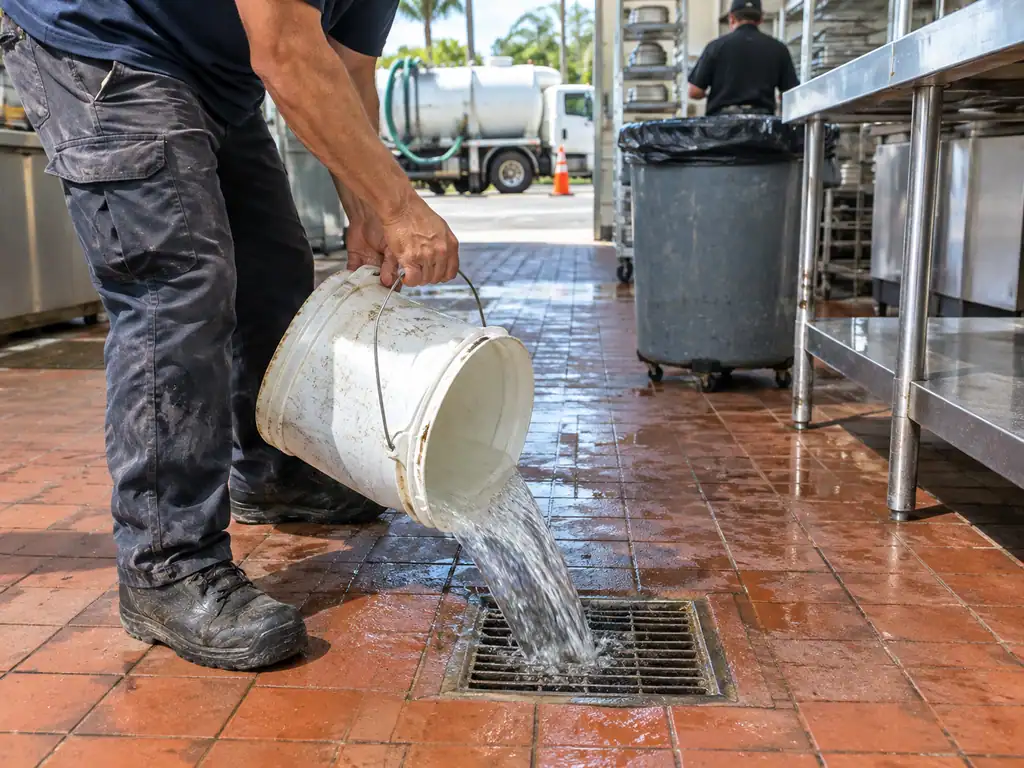
  • Water being poured into a dry floor drain to restore the trap seal
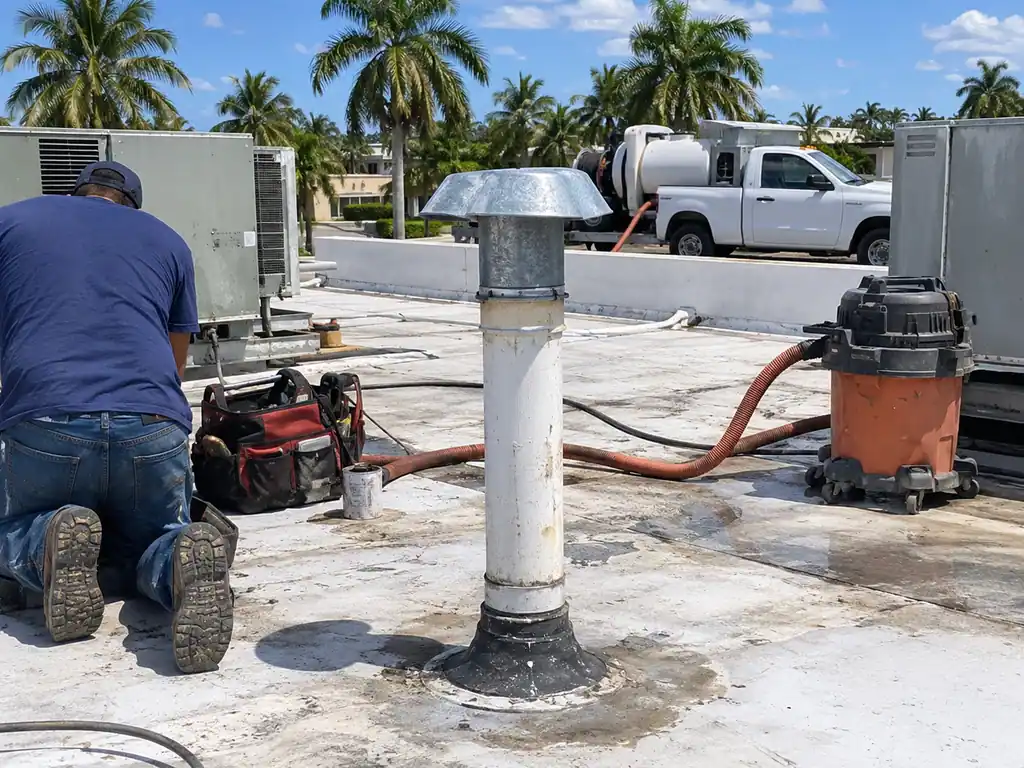
  • Plumbing vent pipe on a flat commercial roof
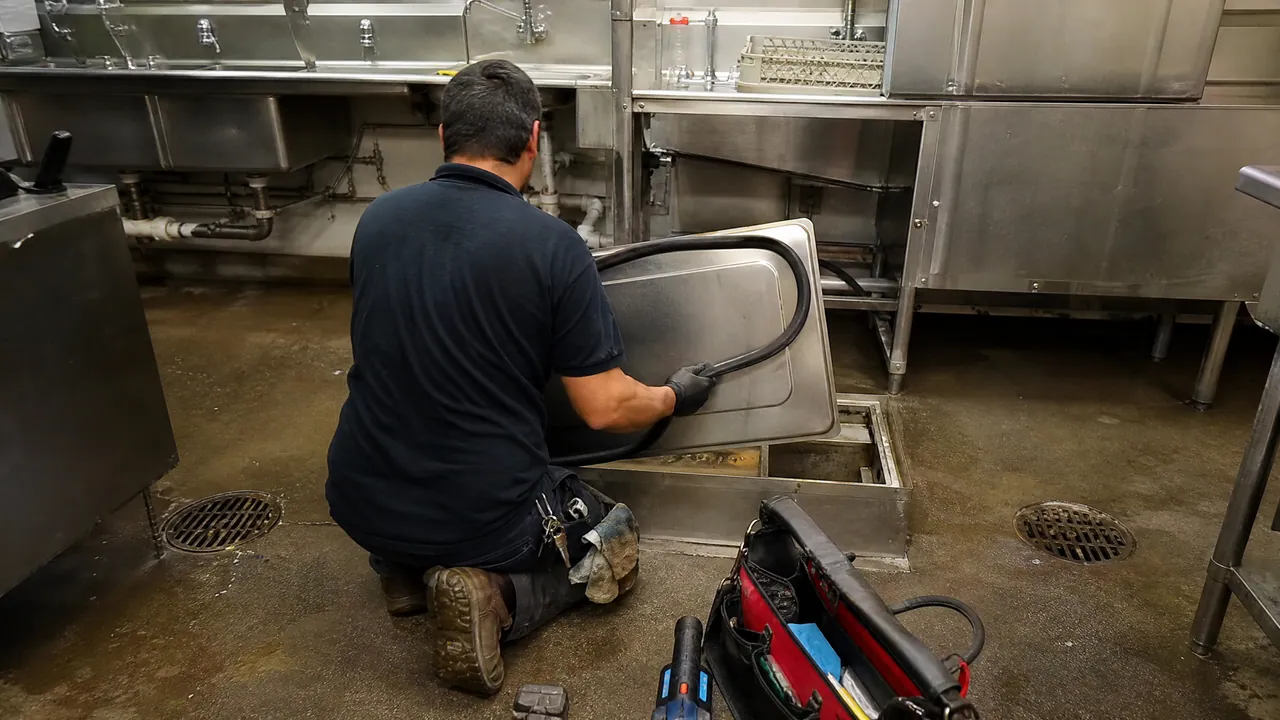
  • Grease trap lid and its rubber gasket being checked for a tight seal
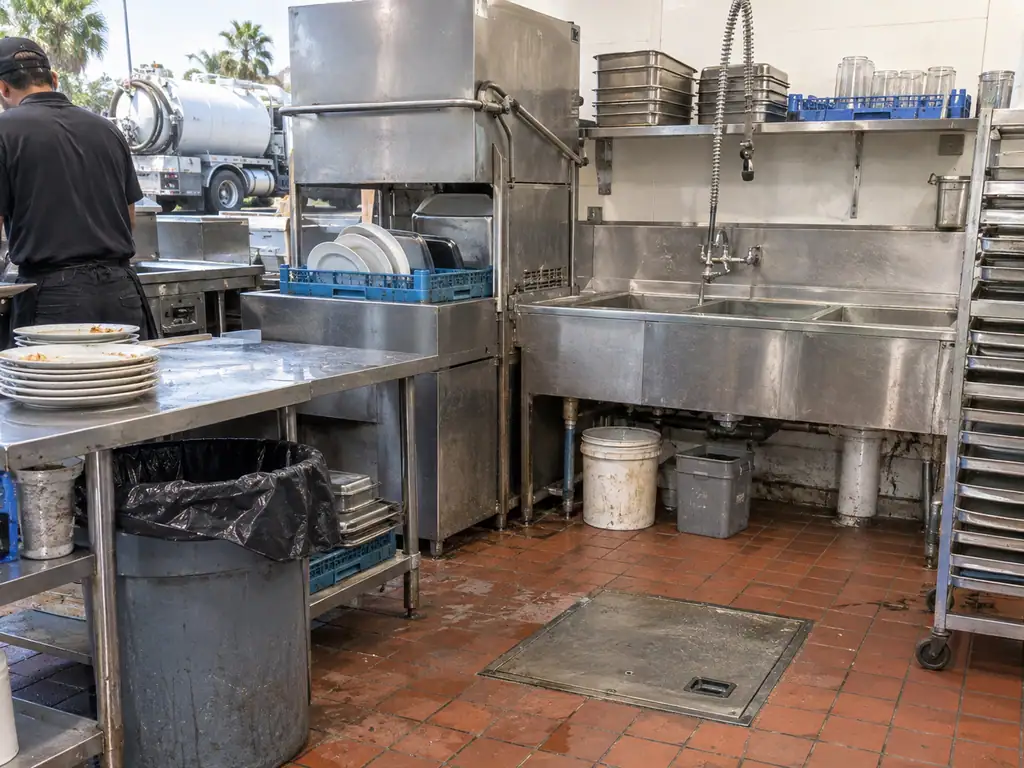
  • Clean restaurant dish area with a floor grease trap lid in place

Grease Trap Odor Control questions

Why does my grease trap smell like rotten eggs?

Hydrogen sulfide from decomposing grease and food solids, usually because the trap is past due. A dry floor-drain P-trap or a failed lid seal can produce the same smell, so check those before assuming.

Why does it smell right after the trap was cleaned?

Pumping stirs up the tank and releases trapped gas, which normally clears within hours. If it lingers, check the lid seal and the vent.

Can I use a deodorizer or enzyme product?

Not without approval in the City of Tampa, and Clearwater bans emulsifiers and grease cutters. They mask the smell or push grease downstream rather than fixing the cause.

Is a grease trap smell a health code problem?

Inspectors treat strong odors as a sign of poor maintenance, and a neglected trap is usually close to a backup. Fix the source before it becomes a violation.

Do I get paperwork I can show an inspector?

Yes. Every pump-out ends with a signed service manifest showing the date, the volume removed, the condition of the unit, confirmation that nothing was returned to it, and the disposal facility's ticket number. Florida law (F.S. 403.0741) requires you to keep that manifest on site for at least a year, and some local programs ask for three.
Call (727) 476-9241 · Talk to a person about your trap